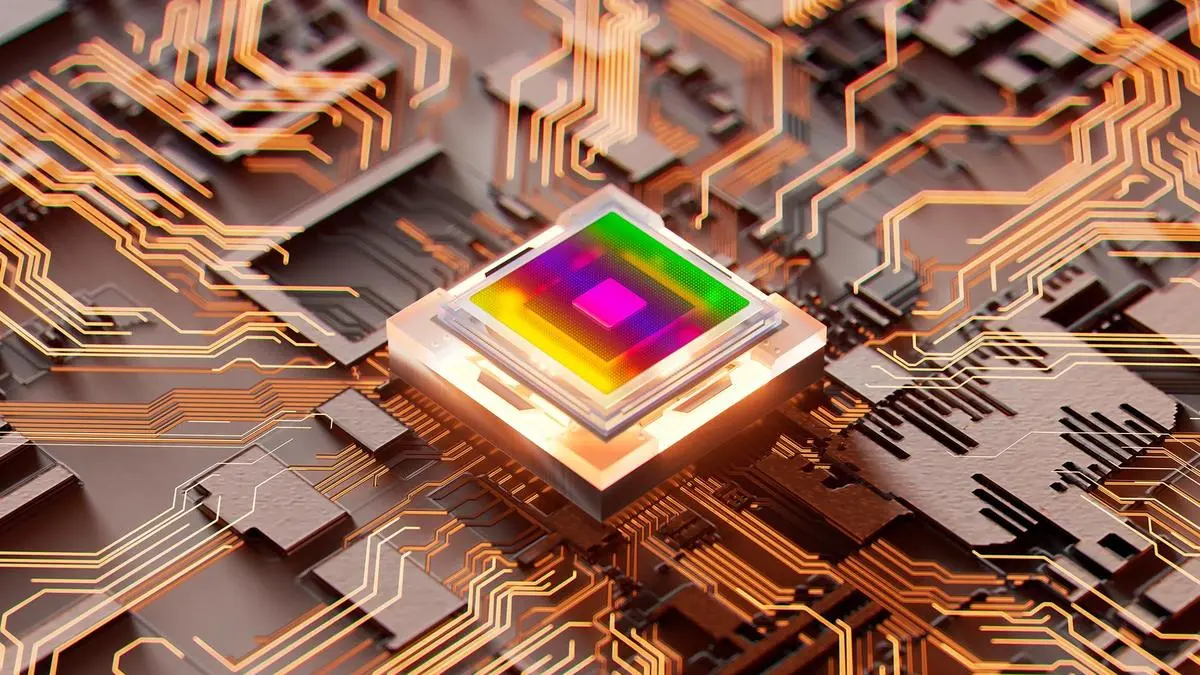
The White House thinks it can build a research-grade quantum computer in less than two years. On June 22, 2026, President Donald Trump signed two executive orders aimed squarely at winning the high-stakes technological race against China. The timeline is aggressive, demanding a machine powerful enough for advanced scientific research by 2028 and widespread commercial capabilities shortly after.
It sounds great on paper. But if you talk to the engineers actually building these machines, you get a much more complicated story. Washington is treating subatomic physics like a standard manufacturing problem, throwing money at an engineering challenge that still hasn't solved its most fundamental flaw.
The real goal behind these orders isn't just to build a faster computer. It's about national survival. A sufficiently powerful quantum machine will instantly vaporize the encryption systems that protect global banking networks, military communications, and private data. By setting a hard 2028 deadline, the administration is trying to force a breakthrough before foreign adversaries beat them to it.
Yet the administration is also hedging its bets. Along with the call for a new computer, the directives accelerate a massive security overhaul, ordering civilian government agencies to shift to post-quantum cryptography by 2031. They are building the weapon and the shield at the same time, because they know whoever finishes second loses everything.
The Two Billion Dollar Gamble on Private Equity
The federal government usually funds basic science through open-ended grants. You give money to a university or a national lab, you wait a few years, and you read their research papers. That's not what's happening here. This new push builds directly on a quiet policy shift from last month, when the Commerce Department announced a massive two-billion-dollar initiative to take direct equity stakes in nine private quantum companies.
This turns the government into a venture capitalist. Instead of just hand-out subsidies, the state now sits on the cap table alongside traditional Silicon Valley backers. If these companies succeed, the government shares in the profits. If they fail, taxpayers hold the bag.
The reported breakdown of that capital shows exactly where the administration is placing its bets:
- IBM is lined up for the largest slice, taking home roughly one billion dollars for a new joint venture.
- GlobalFoundries is slated for 375 million dollars to shore up domestic semiconductor fabrication.
- D-Wave Quantum, Rigetti Computing, and Infleqtion are each down for about 100 million dollars to scale up their respective hardware designs.
This model mimics the aggressive state-backed strategies used in the global semiconductor wars, but applying it to quantum hardware introduces massive risks. When the state becomes a major shareholder in specific tech companies, it loses its status as an objective regulator. It starts picking winners and losers in an industry where nobody actually knows which hardware architecture will ultimately win out.
Why the Tech Inside Qubits Is Still Breaking
To understand why the 2028 deadline is making engineers nervous, you have to look at how these machines actually handle data. Traditional supercomputers process information using bits. A bit is simple. It's a tiny electronic switch that can be either a 0 or a 1.
Quantum machines use qubits. Thanks to the bizarre laws of quantum mechanics, a qubit can exist as both a 0 and a 1 at the same time. This phenomenon allows a machine to calculate millions of possibilities simultaneously, solving math problems that would take a traditional silicon supercomputer thousands of years to finish.
Classical Bit:  [ 0 ] OR [ 1 ]  (Static, predictable)
Quantum Qubit:  [ 0 AND 1 ]     (Superposition, multiple states at once)
The problem is that qubits are notoriously fragile. They require temperatures colder than deep space just to function. If a passing Wi-Fi signal, a slight temperature variation, or even a tiny vibration hits the machine, the qubits lose their quantum state. Physicists call this decoherence. When a machine experiences decoherence, it starts spitting out random errors, making the calculations completely useless.
Right now, the private sector's primary roadmap involves heavy error correction, which requires stacking thousands of physical qubits together just to create a single, stable "logical" qubit. IBM, Google, and Microsoft have all publicly targeted 2029 for their first large-scale commercial machines because fixing this error problem takes time.
The White House is trying to bypass this timeline by funding what officials call a "stepping stone" system. A senior administration official admitted during a press briefing that the government-backed 2028 machine will likely have significantly lower capabilities than the commercial devices promised by tech giants a year later. They want a raw, research-grade machine running at a Department of Energy lab immediately, even if it's noisy and prone to mistakes.
The Battlefield Application Nobody Is Talking About
While the headlines focus entirely on the 2028 quantum computer deadline, the second part of the executive order might actually matter more for immediate military operations. The directive gives the Pentagon exactly 27 months to deploy three distinct types of next-generation quantum sensors into active service.
This isn't theoretical lab work. This is hardware meant for actual war zones. Quantum particles are highly sensitive to outside changes, which makes them terrible for stable computing but incredible for building hyper-accurate sensors.
[Quantum Particle] ---> Highly Sensitive to Interference ---> Bad for Stable Computing
                                                        ---> Perfect for Military Sensing
The military needs these sensors because modern warfare has an Achilles' heel: GPS dependence. In active conflicts across Ukraine and the Middle East, electronic warfare units routinely jam and spoof satellite signals, leaving aircraft, drones, and artillery shells blind.
Quantum sensors solve this by allowing for alternative forms of precision navigation. They read the microscopic fluctuations in the Earth’s magnetic and gravitational fields, giving an aircraft an internal map that doesn't rely on any satellite connection. You can't jam a quantum sensor because you can't jam the Earth's gravity.
The executive order forces the Secretary of Defense to pick three specific sensor projects within 60 days. Beyond navigation, the military is eyeing these tools for satellite-based surveillance. High-sensitivity sensors placed in low Earth orbit can map underground density changes from space, effectively exposing buried missile silos, hidden submarine pens, or cross-border tunnels without needing boots on the ground.
Armoring the State Before the Grid Cracks
The quietest part of this policy package is Executive Order 14409, which focuses entirely on defensive cybersecurity. It forces civilian agencies to accelerate their transition to post-quantum cryptography, moving the hard deadline up to 2031.
This tells you everything you need to know about the administration's true anxiety level. They know that if China or a rogue actor builds a functional quantum machine before the US government updates its security protocols, every piece of legacy encrypted data intercepted over the last decade can be decrypted retroactively.
Moving an entire government infrastructure to new cryptographic standards is a logistical nightmare. It means rewriting core code across hundreds of federal databases, changing how internal intelligence networks talk to each other, and replacing older hardware that can't handle the complex math required by new quantum-resistant algorithms.
The Pentagon has spent years working on this shift behind closed doors. This new directive is essentially an admission that civilian agencies like the Treasury, State Department, and Department of Transportation are dangerously behind. The order forces these slower agencies to match the military's pace, recognizing that a chain is only as strong as its weakest link.
Your Practical Next Steps for the Quantum Shift
You don't need to be a government contractor to care about this timeline. If your business handles long-term data storage, intellectual property, or financial transactions, you need to start preparing for a post-quantum environment now.
- Audit your current encryption assets. Identify exactly where your business stores sensitive data and what cryptographic algorithms (like RSA or ECC) are currently protecting it.
- Assess your vendor roadmap. Ask your cloud providers, bank partners, and software vendors specifically when they plan to implement post-quantum cryptographic standards. If they don't have a plan, start looking for alternative vendors.
- Evaluate data longevity. Understand that data stolen today by malicious actors can be stored and decrypted five years from now when quantum machines become widely available. Protect your highest-value intellectual property with additional layers of physical security.
The 2028 deadline might seem like political theater, but the money flowing into the tech sector right now ensures that the underlying hardware is going to move faster than anyone expected. Waiting until 2028 to update your security strategy means you're already too late.