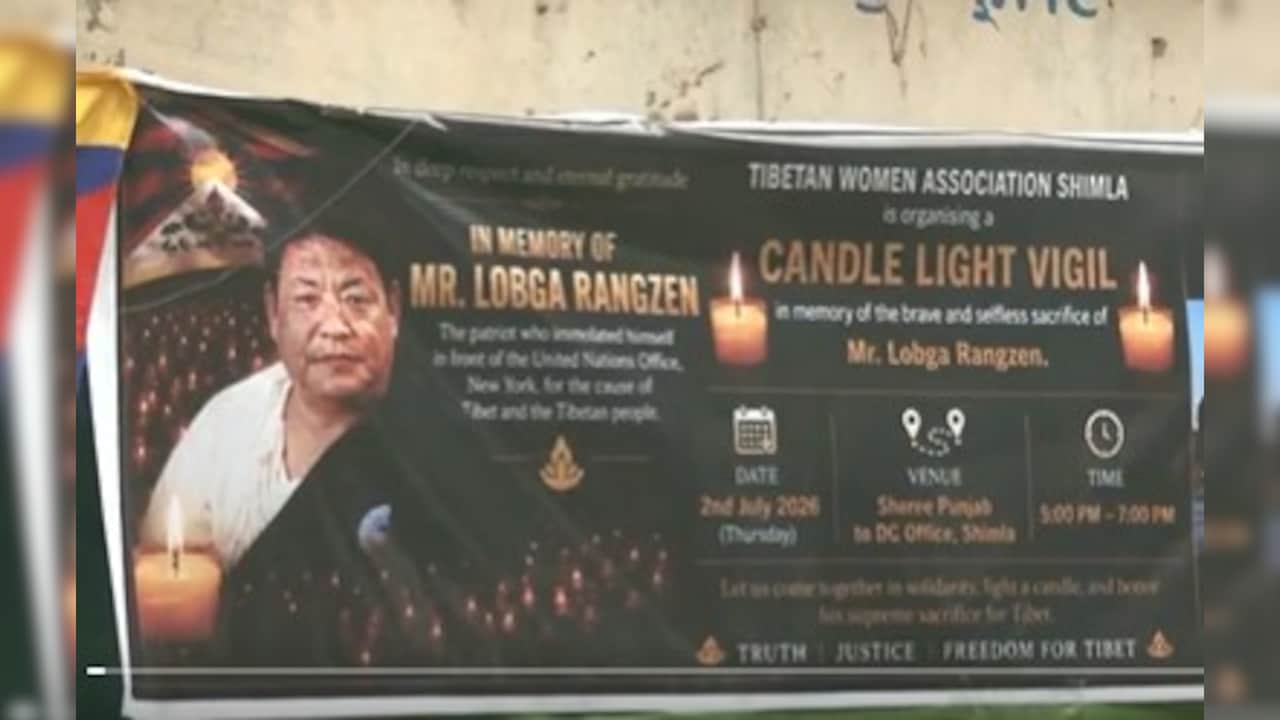
On a humid Thursday evening in New York City, the intersection outside the United Nations headquarters became the center of a horrific, desperate tragedy. Lobga Rangzen, a 52-year-old Tibetan immigrant and Uber driver, stood on the sidewalk, set up his phone to livestream, held a Tibetan flag, and set himself on fire. Within seconds, flames engulfed him. Though first responders rushed to extinguish the fire within fifteen seconds, the damage was already done. He died shortly after at Bellevue Hospital.
This wasn't a sudden, unhinged act. It was a calculated, agonizing scream for attention directed at a world that has largely chosen to look away from Tibet. It was also the very first time a Tibetan has self-immolated on United States soil.
The timing was precise. Rangzen chose July 2, 2026, exactly twenty-four hours after Beijing's sweeping new Ethnic Unity and Progress Law took effect. This law explicitly targets non-Han ethnic groups, forcing them into a singular state-approved national identity. For Rangzen, and millions of Tibetans, this legislation represents the final nail in the coffin for their culture. It drove a quiet, hardworking man in exile to the ultimate form of protest.
The Raw Frustration of an Exiled Community
When the news reached Dharamshala, India, the seat of the Central Tibetan Administration, it hit like a physical blow. Sikyong Penpa Tsering, the democratically elected leader of the Tibetan government-in-exile, did not mince words. He spoke of the deep, suffocating frustration that defines the modern Tibetan experience.
Rangzen wasn't a newcomer to activism. He escaped Tibet in the 1990s, spent years as a monk at the Gaden Jangtse Monastery in southern India, and moved to America around 2006. He spent twenty years attending rallies, waving flags, and driving an Uber to survive. He did everything right by Western standards of peaceful protest. Yet, year after year, he watched China tighten its grip while global leaders shook hands with Beijing.
Penpa Tsering pointed out the tragic irony. Tibetans are watching the international community trade freely with China. Every country, from the smallest nation to superpowers like the United States, takes economic advantage of relations with Beijing while ignoring the systematic erasure of Tibetan identity.
The Tibetan leadership faces a brutal double-edged sword here. They respect the patriotism and the immense sacrifice of people like Rangzen. At the same time, they must beg their people to stay alive. Buddhism teaches that human life is incredibly precious. The official stance from Dharamshala is clear: we need you alive to fight the long fight. Burning yourself brings a flash of media attention, but a living advocate can serve the cause for decades.
The Draconian Law That Triggered the Fire
To understand why Rangzen chose this moment, you have to look closely at what happened on July 1, 2026. China implemented its Ethnic Unity Law. On paper, Beijing claims this law promotes national cohesion and stability. In reality, human rights organizations view it as a terrifying mechanism for forced assimilation.
The law basically criminalizes any expression of distinct ethnic identity that doesn't align with the state's narrative. If you focus too much on Tibetan language, Tibetan history, or Tibetan Buddhist traditions, you're labeled a separatist.
What makes this specific law even more sinister is Article 63. It includes elements of transnational repression. This means China now claims the legal right to punish and criminalize individuals who criticize or oppose the ethnic unity law, even if they live outside of Chinese borders. Rangzen, sitting in New York, knew that his relatives back home in Kardze could face severe state reprisals just because of his activism. He decided to turn his own body into a political message before the state could completely silence his voice.
A Forgotten History Written in Flames
Many people reading the news about New York might think this is an isolated incident. It isn't. The International Campaign for Tibet has documented more than 170 self-immolations since 2009.
The vast majority of these protests happened inside Tibet and China. Monks, nuns, farmers, and students have set themselves on fire to protest restrictions on religion, the ban on the Dalai Lama's photo, and the state-mandated mining of their sacred lands. Because Beijing maintains an absolute information blockade over Tibet, many of these deaths barely made it into Western news feeds.
A small number of these protests have happened in exile—mostly in India and Nepal, near the core refugee communities. Rangzen's action brings the horror directly to the doorstep of the Western world. He left behind sheets of white paper with the words "Free Tibet" and "China out of Tibet" scattered on the Manhattan pavement. He wanted the diplomats inside the UN building to see the physical cost of their silence.
The Geopolitical Indifference to Tibet
During the 1990s and early 2000s, Tibet was a massive cause in Washington. High-profile congressional hearings, celebrity-backed concerts, and regular meetings between US presidents and the Dalai Lama kept the issue on the front page.
The global political landscape changed drastically. As the relationship between Western nations and China shifted from cooperation to intense strategic competition, the focus moved elsewhere. Today, Washington is preoccupied with microchips, trade tariffs, naval dominance in the South China Sea, and the status of Taiwan. Tibet has been quietly pushed to the margins of foreign policy.
The reaction to Rangzen's death proves this point. In the days following the self-immolation, the White House remained quiet. The United Nations offered standard corporate expressions of sympathy but gave no indication that this tragedy would change their agenda regarding human rights scrutinies in China. This political silence is exactly what creates the desperation that fuels self-immolations. When peaceful, diplomatic channels yield zero results for decades, individuals feel forced to choose the most radical, irreversible options.
Practical Steps Forward for the Movement
The flames outside the UN make it impossible to look away right now. If we want to ensure that Rangzen's death isn't just another forgotten statistic, the international community must pivot toward concrete actions rather than empty statements of regret.
First, global governments need to recognize China's Ethnic Unity Law for what it is: a tool of active cultural erasure. Western legislatures must publicly condemn the law and explicitly reject its transnational components. Governments should pass protective measures ensuring that Tibetan exiles living abroad are shielded from Chinese surveillance and intimidation.
Second, the United Nations must stop blocking independent human rights observers from entering Tibet. For years, Beijing has denied UN experts unfettered access to the region. Member states need to tie economic and diplomatic negotiations directly to verified access for independent observers.
Finally, human rights groups must focus heavily on supporting the surviving families of self-immolators. Historically, Chinese authorities have used collective punishment against the relatives of those who protest, cutting off their communication, pulling their jobs, or detaining them arbitrarily. Protecting Rangzen's family in Kardze must be a priority for watchdogs.
Rangzen didn't want people to spend weeks mourning him. In his final recorded message, he specifically asked the Tibetan community to bypass the grief and instead pick up the struggle where he left off. The fire in New York was meant to wake people up. It's up to the international community to decide if they're actually willing to open their eyes.