Playing a movie theme song on a public sidewalk shouldn't get you thrown in handcuffs. Yet, that's exactly what happened to Sam O’Hara on a Washington, D.C. street corner. His crime? Walking behind a National Guard patrol while blasting Darth Vader’s theme music from his phone.
Now, the city is paying for that mistake.
The District of Columbia recently agreed to a $50,000 settlement to resolve a federal lawsuit filed by O'Hara. The deal, brokered by the American Civil Liberties Union of the District of Columbia, closes the book on the city's liability. It doesn't wipe the slate clean for everyone involved, though. The settlement leaves open a burning question about where military authority ends and civilian rights begin on American soil.
This case isn't just a quirky internet story about a viral TikTok video. It's a sharp reminder that government officials can't use law enforcement as a personal shield against mockery.
The Night the Imperial March Met the Real Police
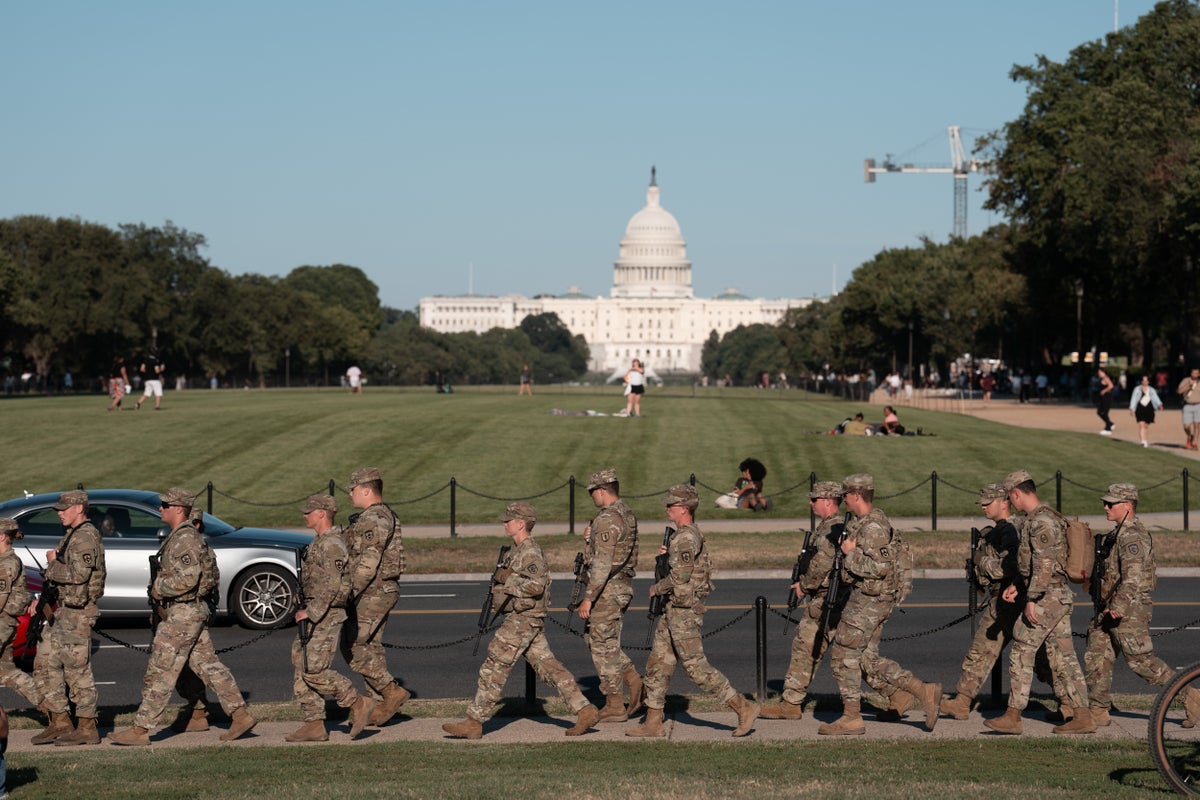
The trouble started in September 2025 near the intersection of 14th and Q streets NW. O’Hara, a local artist working in the hospitality industry, had been staging a unique form of peaceful protest for weeks. Following the deployment of National Guard troops to D.C. by President Donald Trump, O’Hara decided to provide the squads with a live soundtrack. He used his phone and a portable speaker to play "The Imperial March" from Star Wars as they patrolled residential neighborhoods.
He didn't block their path. He didn't touch them. He didn't yell insults. He just played the music.
On September 11, an Ohio National Guard Sergeant named Devon Beck decided he had heard enough. Beck warned O'Hara to stop following the unit. According to court records, Beck said police would come "handle" him if he kept it up.
When O'Hara refused to silence his phone, Beck called the Metropolitan Police Department. D.C. police officers arrived quickly. Instead of de-escalating a clearly non-violent, symbolic demonstration, the officers slapped handcuffs on O’Hara. They kept him detained on the pavement for nearly twenty minutes.
They had no charges to file. They eventually let him go, but the damage to his constitutional rights was already done.
Why D.C. Paid Up and Why the Payout Stings
Cities don't hand over $50,000 because they think they did a great job. They settle because their legal teams look at the facts and realize a jury will hammer them in court.
O'Hara's lawsuit targeted three distinct buckets of wrongdoing. It alleged a violation of his First Amendment right to free speech, a violation of his Fourth Amendment right against unreasonable seizure, and a breach of D.C.’s local laws against false arrest.
The defense didn't have a leg to stand on. You cannot arrest someone for making you look ridiculous. Satire is protected speech.
Even though O'Hara is glad the city blinked, the victory feels hollow to many local residents. The $50,000 payout includes attorney fees and legal costs, and it comes straight out of the public treasury. Taxpayers are footing the bill for the fragile egos of law enforcement officers.
O'Hara didn't hold back about this reality. He publicly stated that true accountability means the money should come out of the offending officers' pensions, not the pockets of the citizens they are supposed to protect. He has a point. Until individual officers face financial consequences for ignoring the Constitution, the pattern of unlawful detentions will keep repeating.
The First Amendment vs Government Discomfort
Government officials frequently confuse their personal discomfort with a public safety threat. When the ACLU took up O'Hara's case, they made it clear that the law does not protect the police from being criticized or mocked.
Scott Michelman, the legal director for the ACLU-DC, pointed out a basic truth. The government doesn't have to like your speech, but they absolutely cannot punish you for it.
The Supreme Court has protected offensive, annoying, and mocking speech for decades. Walking down a public sidewalk while playing music isn't disorderly conduct. It isn't harassment. The moment the police restricted O'Hara's movement, they crossed a line from law enforcement into state-sponsored censorship.
The defense tried to claim that O'Hara was interfering with military operations. That argument falls apart under scrutiny. If a military unit can be completely derailed by a guy playing John Williams music on a smartphone, that unit has much bigger problems than a peaceful protester.
The National Guard on US Streets
This entire mess stems from a broader policy issue that D.C. residents have been fighting for months. In August 2025, the federal administration deployed hundreds of National Guard troops to patrol the capital under the guise of an emergency crime crisis. Local data showed crime was actually dropping at the time, making the deployment look more like a political stunt than a safety measure.
These troops operate under Title 32 orders. This means they are funded by the federal government but commanded by a governor or, in D.C.'s unique case, the president. Crucially, they do not possess civilian arrest powers. They are trained for combat and logistics, not community policing.
When you put camo-clad troops on urban street corners, you create an environment of intimidation. O’Hara explicitly noted that his goal wasn't to mock the individual soldiers, who were likely just following orders. His goal was to highlight the absurdity of an occupying force patrolling a democratic city. A report by the Niskanen Center confirmed what locals already knew. The troop presence did absolutely nothing to lower violent crime rates. It did, however, create a friction point where civil rights were bound to be trampled.
The Fight Against Sergeant Beck Continues
While D.C. and its police department settled their portion of the lawsuit, the legal battle isn't entirely over. O’Hara’s claims against Sergeant Devon Beck, the Ohio National Guard member who called the police, are still moving forward in court.
Beck’s legal team is trying to get the case thrown out. They argue that he was simply performing his assigned duty and that his interaction with O'Hara wasn't a random sidewalk disagreement. They want the judge to grant him immunity.
This is where the case gets incredibly important for future protests. If the judge rules that a military member can summon civilian police to arrest a peaceful protester without facing personal liability, it creates a loophole. It would allow military personnel to chill free speech by using local police as their personal enforcement arm.
O'Hara and the ACLU are digging in their heels. They want a clear ruling that military personnel operating on U.S. streets must respect the constitutional rights of the citizens they encounter.
Know Your Rights If You are Detained During a Protest
If you find yourself in a situation where you are filming, mocking, or protesting law enforcement or military presence, you need to know how to handle police interactions. O'Hara survived his encounter without charges because he kept his cool and let the law do the work later.
Follow these rules to protect yourself on the street.
- Stay calm and do not physically resist. Even if an arrest is completely illegal, fighting back physically on the street can hand the police a legitimate charge to use against you, like resisting arrest or assaulting an officer.
- Ask if you are free to go. Keep it simple. Say, "Am I being detained, or am I free to go?" If they say you aren't detained, walk away immediately.
- Assert your right to remain silent. You don't have to answer questions about what you are doing or why you are protesting. State clearly, "I am exercising my right to remain silent," and then stop talking.
- Document everything. If you can safely record video, do it. If you are handcuffed, try to memorize the officers' badge numbers, names, and the exact time of the incident.
O'Hara's case proves that peaceful, creative protest works. By refusing to stay quiet, he turned a twenty-minute unlawful detention into a major legal headache for the city and shone a massive spotlight on the misuse of military personnel in American communities.