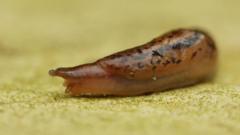
Slugs are a nightmare. Ask any farmer who has watched a field of winter wheat get absolutely hollowed out overnight. It is not just a mild annoyance like losing a few prized hostas in a suburban garden. For large-scale arable farming, it is an economic gut punch. In the UK alone, slug damage to wheat and oilseed rape drains roughly £44m every single year.
For decades, the standard response was blunt force. Spread chemical pellets everywhere. Cover the whole field. Hope for the best.
But things changed when metaldehyde, the go-to chemical slug killer, was banned in the UK due to environmental risks. Its replacement, ferric phosphate, works, but it isn't cheap. Spreading it blindly across hundreds of acres is terrible for profit margins and puts unnecessary chemicals into the soil.
The real solution isn't finding a stronger poison. It is understanding exactly where these slimy pests hide. That is where predictive mapping comes in.
The Common Mistake in Fighting Slugs
Most people assume slugs are everywhere. You walk out into a damp field at night, step on a few, and assume the entire acreage is crawling with them.
That is wrong. Slugs do not distribute themselves randomly. They gather in highly specific, localized clusters based on soil type, moisture levels, and field topography.
The problem is that finding these patches by eye is practically impossible during the day. Farmers used to waste thousands of pounds treating entire fields when the actual pest pressure was isolated to maybe 20% or 30% of the land. It was a massive waste of time and money.
How the Slimers Project Cracked the Code
To fix this, a three-year research initiative called the Slimers project stepped in. Funded by Defra and led by the British On-Farm Innovation Network, the project teamed up with scientists from Harper Adams University and 28 tech-savvy farmers. These growers became "slug sleuths," placing flat plastic saucer traps across their fields to log slug numbers.
The real magic happened when researchers took that field data and combined it with soil sampling and local weather patterns to build a predictive computer model.
[Field Traps + Soil Samples + Weather Data]
                   ↓
         [Predictive Algorithm]
                   ↓
      [Targeted Slug Prediction Map]
The algorithm creates high-resolution slug prediction maps. Instead of guessing, farmers can see exactly where the highest concentrations of grey field slugs are going to strike.
Professor Keith Walters, who led the model's development at Harper Adams University, uncovered a fascinating quirk about slug behavior during the trials. When fields get completely waterlogged, traditional slug patches break down because the environment becomes unstable.
However, the slugs don't just vanish. They temporarily re-form in totally unexpected areas of the field before migrating right back to their original hotspots once the soil dries out. Understanding these weird migration patterns allows growers to intercept them before they reach vulnerable crops.
The Real-World Payoff
This isn't just an academic exercise. Sixteen different farmers field-tested these prediction maps over the autumn and winter seasons. The results were immediate.
By using the maps to pinpoint their applications, growers managed to cut their slug pellet usage by a clean 50%.
Charles Paynter, a Bedfordshire farmer who participated in the trial, noted that having hard data completely changed his approach. He can now accurately evaluate the actual risk in his fields rather than panicking and spreading pellets at the first sign of a silver trail.
When you cut pesticide use in half, you aren't just saving the local worm and bird populations. You are keeping thousands of pounds in your bank account.
Beyond Pellets: Robots and Genetics
Predictive mapping is just phase one. The broader goal of the Slimers project includes training autonomous field robots to handle the dirty work.
Using camera rigs built by the Small Robot Co, farmers have been capturing thousands of multi-spectral images of slugs and crop damage. This data trains machine-learning algorithms so that autonomous robots can roam fields at night, spot the pests, and micro-dose them with a biological control like Phasmarhabditis nematodes—a natural slug parasite. It is a completely hands-off, chemical-free execution method.
At the same time, plant breeders are looking at long-term defense. Scientists recently identified three specific areas of the wheat genome that provide natural resistance to the grey field slug. If breeders can successfully integrate these traits into commercial seed varieties, future crops might just defend themselves.
Your Next Steps to Manage Slugs Smarter
If you're dealing with slug pressure on your land, stop blanket-spraying immediately.
- Map your hotspots manually: Before investing in high-tech solutions, place simple shelter traps (like plastic saucers or old carpet squares) across different zones of your field. Check them after a damp night to identify your specific soil vulnerabilities.
- Target heavy soils first: Slugs thrive in heavy, clay-rich soils that retain moisture far longer than sandy fields. Focus your monitoring resources there.
- Delay chemical intervention: Wait until you cross economic thresholds rather than treating preventatively. Young crops are only highly vulnerable up to the four true-leaf stage. Once they get past that window, they can usually outgrow the damage.