You don't forget the day your childhood ends. For a generation of youth in Balochistan, it didn't end with a milestone or a graduation. It ended when a father, a brother, or a son walked out the door and never came back. No arrest warrant. No phone call from a police station. Just a sudden, terrifying void.
For nearly two decades, this has been the defining reality in Pakistan's southwestern province. What started as a hidden state strategy to suppress a regional insurgency has ballooned into a systemic human rights crisis. Families are no longer staying quiet. The long-standing wall of fear is cracking, driven by an open letter and an unstoppable grassroots movement led mostly by women who have nothing left to lose.
If you want to understand why this matters right now, you have to look past the official press releases from Islamabad. You have to look at the math, the stories, and the sudden judicial escalation happening right under the world's nose.
The Human Cost of 17 Years of Waiting
When we talk about enforced disappearances, the statistics feel distant. The Pakistan Commission of Inquiry on Enforced Disappearances has recorded over 10,000 cases since 2011. Human Rights Watch and Amnesty International routinely drop massive reports filled with dates and legalese. But the true weight of this crisis lives in the daily torment of the families left behind.
Imagine living in a state of perpetual mourning where you can't even bury your dead because you don't know if they're actually dead. It's a psychological limbo designed to break a community's will to resist.
Activists like Sammi Deen Baloch, whose father Dr. Deen Mohammad Baloch was abducted from a hospital during a night shift in 2009, have spent their entire adult lives clutching faded photographs outside press clubs. They aren't asking for political revolution. They're asking a basic question: Where are they?
The state's typical response is a mix of blanket denials and bureaucratic stone-walling. When prominent officials do speak, they often dismiss the crisis as "systematic propaganda" or claim that the missing individuals chose to "self-disappear" to join militant groups abroad. But you don't need a degree in international relations to see through that logic. If these thousands of missing people are actual criminals or insurgents, the solution is simple: produce them in a public court, present the evidence, and try them under the law. The fact that they remain hidden tells you everything you need to know about the strength of the state's legal case.
From Grief to Gridlock
For years, the Pakistani security apparatus managed to keep a tight lid on information coming out of Balochistan. It operates as an information black hole. Foreign journalists are barred from entering, and local reporters who dare to cover the abductions face severe retaliation. According to the Balochistan Union of Journalists, over 40 media workers have been killed since 2000.
But the strategy of total silence has backfired. By targeting an entire generation of fathers, the state accidentally raised a generation of daughters who refuse to be intimidated.
The formation of the Baloch Yakjehti Committee (BYC) shifted the entire dynamic of the struggle. This isn't a shadowy underground network; it's a completely transparent, non-violent civil rights movement. In late 2023, they did something the establishment never saw coming. They organized a 1,000-mile march from the depths of Balochistan straight to the capital city of Islamabad. Suddenly, the families the state tried to hide were standing on the concrete roads of the capital, forcing regular Pakistani citizens to look them in the eye.
Balochistan Conflict Dynamics:
- Largest and poorest province in Pakistan
- Rich in copper, gold, and natural gas
- Local population faces deep economic marginalization
- State response relies heavily on security operations over political dialogue
The resource irony here is glaring. Balochistan is Pakistan’s largest province, incredibly rich in natural gas, copper, and gold. Yet, more than half of its population lives below the poverty line. The local people watch multi-billion-dollar international infrastructure projects cut through their land while their youth disappear without a trace. The state views the region as a resource vault to be secured by any means necessary, treating peaceful civil dissent with the exact same iron fist it uses against armed militancy.
Weaponizing the Courts to Silence Dissent
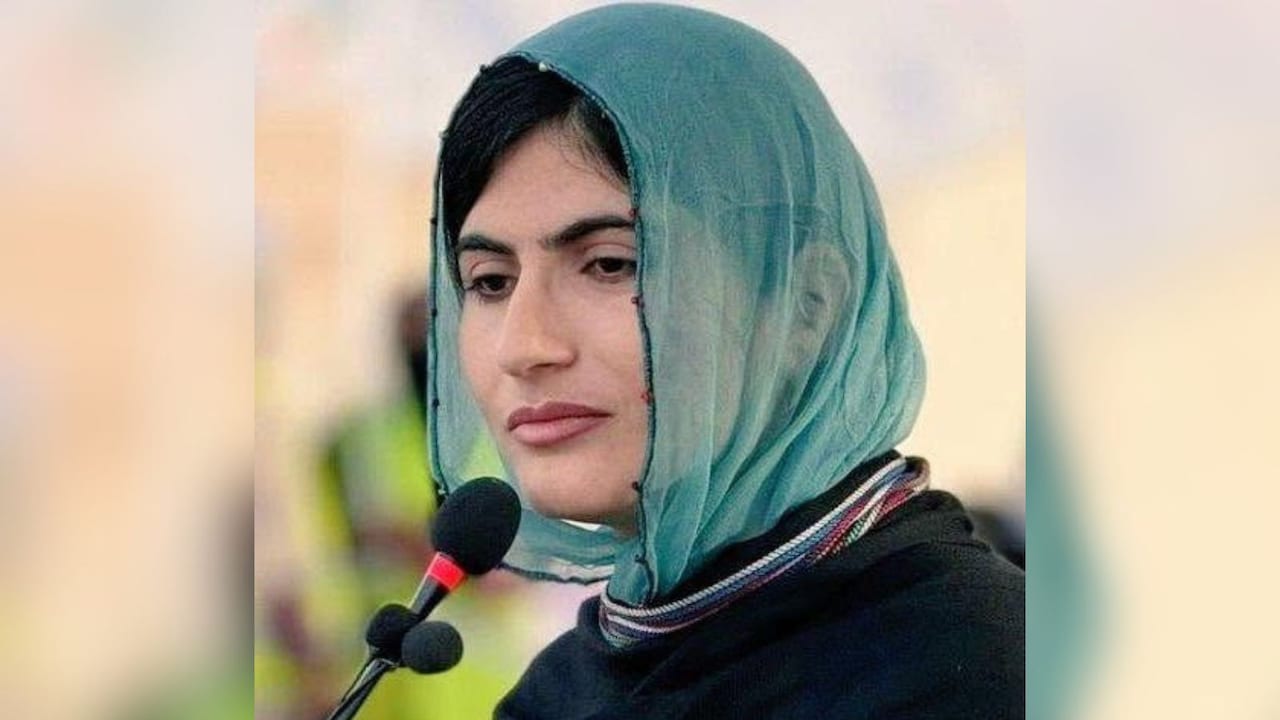
The situation has reached a critical tipping point. In June 2026, an anti-terrorism court in Quetta handed down a life sentence to Dr. Mahrang Baloch, the prominent 33-year-old medical doctor who has become the face of the BYC movement.
The state charged her with murder and terrorism stemming from a 2024 protest where a paramilitary soldier was killed in clashes. Her legal team boycotted the expedited trial, labeling it a biased sham held inside prison walls without any direct evidence linking her to the violence.
Amnesty International immediately condemned the verdict, calling it a cynical misuse of anti-terrorism laws designed strictly to eliminate peaceful dissent.
This move exposes the profound anxiety of the state. When a nuclear-armed military establishment feels so threatened by a young doctor holding a microphone that it has to weaponize the judicial system to lock her away for life, it has already lost the moral argument.
The real danger here isn't just the injustice done to one activist. It's what this verdict communicates to the rest of the population. For decades, elders have tried to convince angry, marginalized youth that change can happen through peaceful, democratic engagement. By criminalizing non-violent protests and locking up its leaders, the state is effectively closing the door on dialogue. When you make peaceful resistance impossible, you make armed resistance inevitable.
What Needs to Happen Next
The crisis of forced disappearances won't be solved by another government committee or an empty promise of development funds. If there is ever going to be stability in the region, the central government has to take immediate, transparent actions to restore basic constitutional trust.
- Acknowledge and Audit: The judiciary must enforce Articles 9 and 10 of the Pakistani Constitution, requiring security agencies to register every single detainee and present them before a magistrate within 24 hours.
- Repeal Draconian Oversight: The sweeping powers granted to paramilitary forces under the Anti-Terrorism Act must be reeled in to ensure civilian legal institutions have absolute jurisdiction over arrests.
- Allow Independent Verification: The state must lift the media blackout on Balochistan and allow United Nations human rights observers and independent international journalists unrestricted access to verify the status of missing persons.
The era of quiet compliance is over. The open letters have been written, the marches have been held, and the world is finally starting to pay attention. You can lock up the leaders, but you can't disappear the truth.
,webp/007/258/670/2560x1440.3.webp)