Space salvage is brutal. If you want proof, look no further than what just happened over the Pacific.
A high-stakes, $30 million rescue mission intended to save NASA's decaying Neil Gehrels Swift Observatory is stuck on the ground. A last-minute technical glitch stopped it cold on July 2, 2026, right as the clock is ticking down to an October expiration date. You might also find this connected coverage interesting: Why Japan Needs A Strong India For Its Own Economic Survival.
Northrop Grumman's Stargazer L-1011 carrier plane actually took off from Kwajalein Atoll in the Marshall Islands after fighting foul weather all week. The plan was simple: get to altitude, drop the Pegasus XL rocket strapped to the plane's belly, and send a robotic savior into orbit.
Instead, the crew caught a bad data warning mid-flight. They aborted the drop, keeping the rocket attached to the plane. As discussed in recent articles by The Washington Post, the effects are widespread.
Now, NASA and startup Katalyst Space Technologies are staring at a shrinking calendar. If this rescue vehicle doesn't get into the sky soon, one of the most productive space telescopes in history will turn into a multi-million-dollar shooting star by autumn.
The Clock is Ticking for Swift
We don't usually think of satellites as things that need a tow truck. But Swift has a fatal flaw. It has no propulsion system.
Launched in 2004 for what was supposed to be a short two-year gig, the telescope has spent over two decades tracking gamma-ray bursts and exploding stars. It basically acts as cosmic tech support, spotting massive explosions and tipping off other telescopes to look closer.
The problem? Intense solar activity during the recent solar maximum heated up and expanded Earth's upper atmosphere. That extra fluff created serious aerodynamic drag. Swift is currently trapped in a downward spiral, losing altitude fast and sitting at a vulnerable 224 miles above the ground.
To slow the bleeding, NASA ground controllers basically put the telescope into a coma back on February 11, 2026. They powered down major instruments and twisted the solar arrays to reduce its cross-sectional profile by 30%. That bought them time until October. But time is running out.
Inside the Unprecedented $30 Million Gamble
NASA isn't throwing a multi-hundred-million-dollar government rocket at this. They hired an agile private startup called Katalyst Space Technologies under a compressed contract.
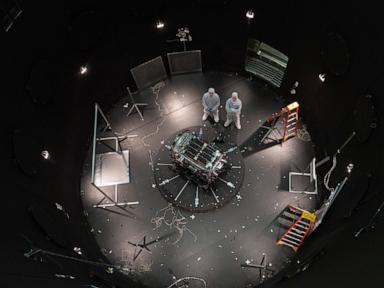
Their solution is a 425-kilogram robotic vehicle called LINK. Think of it as a small refrigerator with a massive 40-foot solar wingspan.
How the Rescue Plan Works
- The Launch: A Pegasus XL rocket gets dropped from an airplane, firing up its solid-fuel engines to head to space.
- The Chase: LINK spends about a month catching up to the falling Swift observatory.
- The Catch: Using three robotic arms with two finger-like grippers each, LINK autonomously latches onto the aging telescope.
- The Push: LINK fires up its own ion engines over several months, slowly dragging Swift from 224 miles up to a cozy, safe orbit of 373 miles.
If it works, Swift goes back to work by September or October. If it fails, or if they can't get off the ground in time, Swift hits the heavy air layers and burns up over the ocean.
What This Means for the Future of Space Debris
This isn't just about saving one old telescope. It's a massive proof-of-concept for the entire space industry. Right now, when a satellite runs out of gas or gets knocked out of its orbit, it becomes dangerous space junk.
China successfully used a robotic vehicle to push a dead satellite into a graveyard orbit back in 2022, but this is the first time the U.S. is attempting a commercial robotic intervention on a live science asset.
Katalyst Space CEO Ghonhee Lee noted before the launch attempt that NASA has a ton of legacy observatories that could benefit from this exact kind of tune-up. It's a whole new playbook for orbital logistics. Instead of launching a new $500 million machine every time an old one sags, you pay $30 million for a robotic nudge.
Next Steps for the Mission Teams
Engineers are currently pulling the telemetry data from the aborted flight to figure out whether the warning light came from the Pegasus rocket systems or the Stargazer carrier plane itself. They won't attempt another flight until they know exactly what tripped the sensor.
Keep an eye on official mission updates from the NASA Universe team and Katalyst Space over the coming days. The team needs to clear the technical hurdle, verify the solid-fuel booster health, and catch a clear weather window over Kwajalein Atoll before Swift drops past the point of no return.