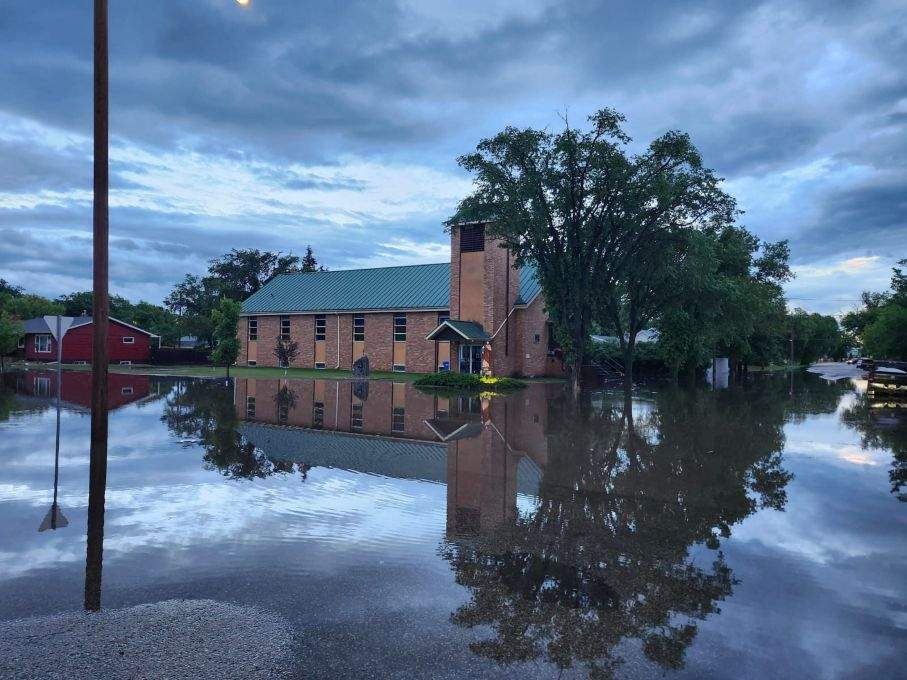
Water doesn't care about municipal boundaries or infrastructure budgets. When two weeks of relentless rain pounded eastern Saskatchewan, the ground simply gave up. By July 2026, 17 different communities, including towns like Kamsack and Norquay, alongside the Cote and Keeseekoose First Nations, had no choice but to declare official states of emergency.
If you think a flood is just about a river spilling its banks, you're missing the real crisis. The actual disaster starts when the rain stops and the water sits.
Right now, residents are dragging heavy, toxic, waterlogged couches and ruined carpets onto their lawns. It smells like rot and raw sewage. In Kamsack, a town sitting right near the Manitoba border, roughly 70% of the homes have flooded basements. Think about that. Nearly three quarters of an entire town is underwater or dealing with the aftermath.
The Infrastructure Blind Spot No One Wants to Fund
Our small towns aren't built for this anymore. Local sewer systems failed almost immediately under the deluge, pushing black water and raw filth backward into basement drains. It's a localized nightmare that points to a massive structural failure across the prairies.
Saskatchewan Community Safety Minister Michael Weger noted that towns must now bring in engineers to redesign local drainage. That sounds fine during a press conference. But out here, smaller municipalities don't have the cash to overhaul their systems.
Look at the town of Churchbridge just down the road, which faced its own crisis earlier this summer. Mayor Jared Melnyk explicitly called out aging infrastructure and agricultural ditching as major culprits. When surrounding farms drain their fields rapidly to protect crops, all that water surges directly toward the nearest town. It's a classic case of solving one problem by creating a bigger one for your neighbor.
Cutting Off the Lifelines
A flooded basement is expensive, but a washed-out highway is isolating. The flooding forced the closure of multiple roads, completely cutting off communities like Cote First Nation.
Chief George Cote described how crews had to scramble to construct a temporary bridge over Highway 8 just so people could buy food, access medical care, or leave their properties. The Saskatchewan Public Safety Agency (SPSA) had to deploy emergency officers with pumps, hoses, and sandbags to prevent total isolation.
The sheer volume of water was staggering. Between Canora and Yorkton, officials logged between 100 and 120 millimeters of water directly on top of the asphalt. Roads looked less like transportation corridors and more like shallow lakes.
What the Clean Up Looks Like on the Ground
If your property got hit, you can't afford to sit around waiting for government checks. Mold sets in within 24 to 48 hours. You need to act immediately, but you have to do it safely.
- Cut the power first: Never step into a wet basement until a qualified electrician or your utility provider cuts the main line.
- Assume everything is contaminated: This wasn't clean rainwater. It's mixed with agricultural runoff and backed-up municipal sewage. Wear heavy rubber boots, gloves, and an N95 mask.
- Strip it to the studs: Mud and filth trap moisture behind drywall. If the water rose a foot, you need to cut away at least two feet of drywall to ensure the framing can dry completely.
- Document everything before throwing it out: Insurance adjusters will deny your claim if you don't have clear photos. Take pictures of the water lines on the walls, individual items, and serial numbers of appliances.
The province is offering emergency resources, but local leaders like Chief George Cote have already pointed out that small communities lack the baseline cash to replace vital culverts and gravel to fix local gravel roads. The immediate volunteer effort has been incredible, with people sharing pumps across a 50-kilometer radius to empty out spaces before the next weather system hits. But neighborly goodwill doesn't pay for industrial-grade civil engineering.
The immediate next step for any affected homeowner is to register directly with the SPSA and contact their insurance provider to initiate the Provincial Disaster Assistance Program (PDAP) process. Do it today, because the backlog for adjusters in eastern Saskatchewan is going to be weeks long.