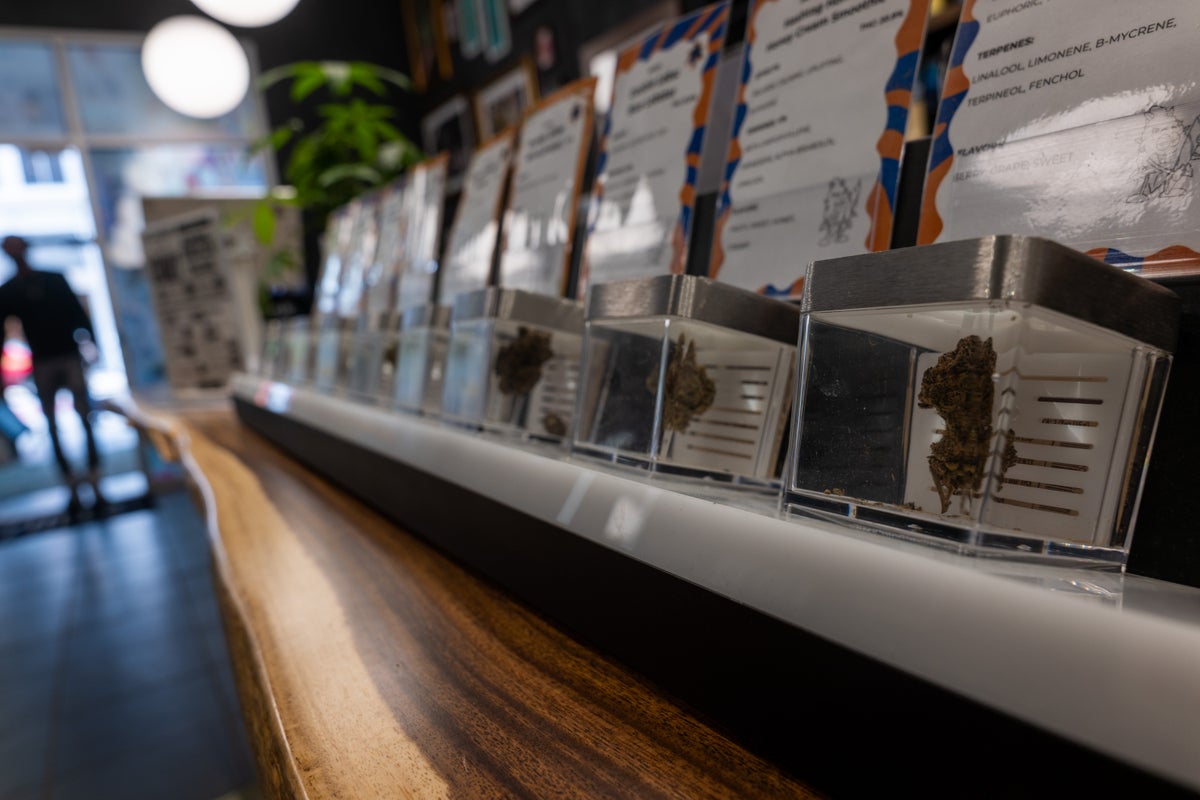
No state has ever successfully rolled back recreational cannabis after legalizing it. Not one. Colorado, Washington, California—they have all tweaked their rules, raised taxes, or tightened rules, but none have completely shut down their licensed retail markets.
That streak could end this November.
A well-funded campaign has put an initiative on the Massachusetts ballot called "An Act to Restore a Sensible Marijuana Policy." If it passes, it will completely ban the commercial sale of adult-use cannabis in the state. Medical marijuana would stay, but the $1.6 billion recreational market that Bay Staters built over the last decade would disappear overnight.
It sounds like a massive grassroots cultural shift, a sudden wave of buyer's remorse in a deep-blue state. But when you look at where the money is coming from and how those ballot signatures were actually gathered, the real story looks completely different.
The Out of State Cash Driving the Repeal
Local activists did not build this movement. Public records show that a single Virginia-based organization, SAM Action (Smart Approaches to Marijuana), injected $1.55 million into the Coalition for a Healthy Massachusetts to get this initiative on the ballot.
SAM Action is a national prohibitionist group with millions in its war chest. They are the same organization suing the federal government to block the rescheduling of cannabis. Failing to stop legalization at the federal level, they are now targeting individual states, hoping that a single victory in a progressive state like Massachusetts will create a domino effect across the country.
The group leading the local effort, spearheaded by political consultant Caroline Cunningham, argues that commercial legalization has brought unexpected public health costs and increased accessibility for minors. They want to eliminate the 10.75% state excise tax on recreational sales, claiming that the commercialization of the plant has gone too far.
Local operators see it as an existential threat funded entirely by outside interests who do not care about the local economy.
The Bait and Switch Signature Controversy
Getting an initiative onto the ballot in Massachusetts requires serious legwork. Campaigns must collect 74,574 certified signatures in the first round and another 12,429 in the second round if the state legislature declines to enact the measure.
The prohibition campaign hit those targets, but the tactics used by paid signature gatherers sparked an immediate backlash. Hundreds of residents reported being tricked into signing the petition.
Gatherers allegedly told voters they were signing a petition to fund affordable housing, stop fentanyl trafficking, or support public schools. A survey conducted by the pro-cannabis group MassCann found that out of 2,300 signers polled, 1,163 explicitly stated they never would have signed if they knew the petition's true purpose was to recriminalize adult-use marijuana.
Legal challenges were filed with the State Ballot Law Commission to throw out the signatures based on widespread fraud. The commission ultimately dismissed the challenges, stating that while the accounts were troubling, there was not enough admissible evidence to invalidate the thousands of specific signatures required to knock the measure off the ballot. Misleading voters during a petition drive might be deceptive, but under current state judicial precedent, it is protected speech. The measure is locked in for November.
What is Actually on the Line
If voters choose to pull the plug on the commercial market, the economic fallout will be massive and immediate. The legal cannabis industry in Massachusetts is not a small, fringe operation. It is a major economic engine.
- 27,000 jobs would disappear. This includes retail budtenders, commercial cultivators, laboratory technicians, security staff, and delivery drivers.
- $272 million in annual state tax revenue would vanish. This money currently funds local infrastructure, public schools, and community development programs.
- $9 billion in total sales have been generated since the market opened in 2018.
Banning legal shops will not stop people from consuming cannabis. It just shifts the entire market back to unregulated channels. Industry analysts estimate that eliminating legal retail will immediately push 40% to 50% of all cannabis transactions back to the illicit market.
Consumers lose access to lab-tested products with accurate dosage labeling. Instead of buying a tracked, taxed, and tested edible at a local store, buyers will rely on unregulated dealers, completely contradicting the public health goals the prohibitionists claim to champion.
The Potency Trap for Medical Patients
The proposed ballot initiative contains two distinct versions, labeled Version A and Version B. Both versions strip away recreational sales, but Version B goes a step further by introducing strict potency caps on the remaining medical marijuana program.
This is where the policy becomes genuinely dangerous for patients. Many medical cannabis patients rely on high-potency concentrates and oils to manage severe chronic pain, muscle spasms from multiple sclerosis, or the debilitating side effects of chemotherapy. If Version B passes, those products become illegal even for registered patients.
Dr. Benjamin Caplan, founder of the CED Clinic and a specialist in medical cannabis care, points out that forcing patients off high-potency products does not cure their ailments. It just leaves them with two choices: turn to the black market or rely on highly addictive prescription opioids.
Where the Voters Stand
Despite the aggressive funding from out-of-state groups, the repeal faces a steep uphill battle with the public. Massachusetts voters originally approved adult-use cannabis with a 54% majority in 2016, and support has grown significantly since then.
A University of New Hampshire Survey Center poll found that 63% of likely Massachusetts voters strongly or somewhat oppose the ballot initiative to ban sales. Only 20% actively support a total rollback.
Bay Staters have grown accustomed to the convenience, safety, and tax benefits of a regulated market. Towns that initially banned dispensaries back in 2016 have steadily reversed their local bans over the last few years to capture a piece of the tax revenue.
The opposition campaign, named Stop the Repeal, is launching a massive grassroots counter-offensive. Led by Ryan Dominguez of the Massachusetts Cannabis Coalition and former Boston City Councilor Tito Jackson, the campaign is urging local dispensaries to distribute educational materials directly to customers. They are treating this vote as a historic defense of a voter-approved industry.
Next Steps for Voters
The state legislature passed its May deadline without acting on the petition, officially sending the question to the voters. The prohibition campaign is currently finishing its final round of signature collection to guarantee its spot on the November 3 ballot.
If you live in Massachusetts and want to protect or oppose this industry, you need to check your voter registration status before the fall deadlines. Do not rely on what a paid signature gatherer tells you outside a grocery store. Read the official ballot summary provided by Attorney General Andrea Campbell when you enter the voting booth. A "Yes" vote will dismantle the commercial market effective January 1, 2028. A "No" vote keeps the current regulated system exactly as it is.