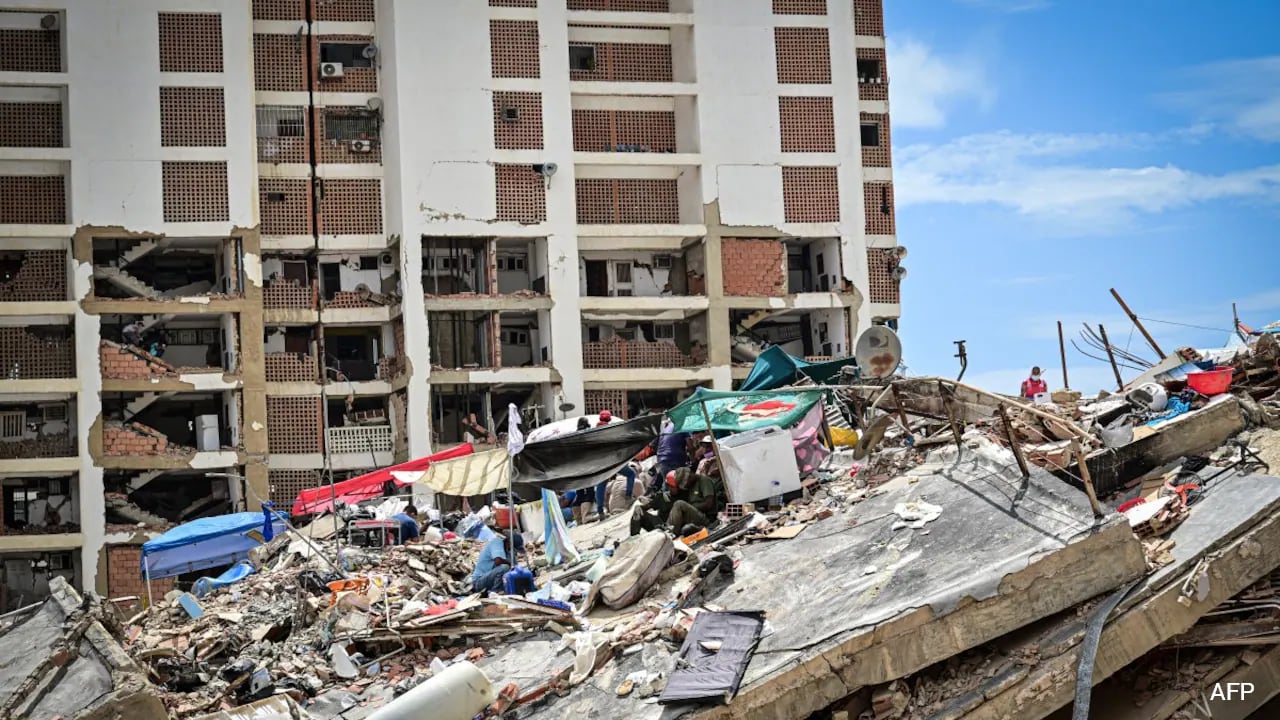
The ground in northern Venezuela didn't just shake on June 24, 2026. It completely ripped apart. Twin earthquakes measuring 7.2 and 7.5 on the Richter scale hit just 39 seconds apart near the coastal town of Morón, flattening entire neighborhoods and triggering memories of the country's worst historical disasters.
Almost two weeks after the shocks, the official death toll released by National Assembly President Jorge Rodríguez has climbed to 3,535. The government also reports 16,740 people injured and 17,854 left entirely homeless.
Those numbers are staggering, but they don't tell the full story. Honestly, they aren't even close to the full story.
If you're looking at the data coming out of Caracas, you're missing a massive, deep gulf between official statistics and independent satellite reality. While the state counts fewer than 900 damaged buildings, international agencies and researchers look at the destruction and see a vastly different picture. The sheer scale of this humanitarian crisis is breaking the country's infrastructure, and the true toll might not be clear for months.
The Chasm Between Official Tally and Satellite Reality
The Venezuelan government's updated figures state that exactly 856 buildings were damaged, with 190 of those completely collapsed. They claim that 6,462 rescues have been completed and that 86,794 families have received some form of state assistance.
When you look at independent data, those numbers fall apart.
A joint satellite analysis from NASA and researchers at Oregon State University tells a radically different story. Their assessment indicates that closer to 58,870 structures have been damaged or completely ruined. That is not a minor statistical discrepancy. It is a massive gap that shows how limited ground access and political filtering can obscure the real level of destruction.
The divergence continues into the economic sphere. The United Nations Development Programme estimates direct physical damage at around $6.7 billion, which translates to roughly 6% of Venezuela's gross domestic product. Risk modeling firm Verisk pushes that estimate even higher, projecting total economic losses to exceed $10 billion.
For an economy already struggling with long-term instability, a hit of this magnitude is catastrophic. State-run oil company PDVSA reports only minor disruptions to its main exports, but its Catia La Mar fuel terminal sits right in the bullseye of the worst-hit zone. Teams are still inspecting the facility for structural damage, and a prolonged shutdown there would strangle local fuel supplies when emergency vehicles need them most.
The Missing Thousands in La Guaira
The most terrifying aspect of this disaster is the count of the missing.
The Venezuelan government hasn't updated its official missing person count since June 25, the day after the disaster. At that time, they listed 157 people as missing. They even launched a digital platform and a dedicated phone line for families to report lost relatives, yet that number has remained completely frozen for days.
The United Nations paints a far darker picture, estimating that as many as 50,000 people could still be unaccounted for across the northern states.
At the same time, a citizen-led initiative called Desaparecidos Terremoto Venezuela has built an independent registry. They have documented more than 30,000 individuals whom relatives have been completely unable to reach since the morning of June 24.
This tracking gap exists because entire communities along the steep hillsides of La Guaira state were simply buried under landslides triggered by the twin shocks. The region's geography makes it incredibly vulnerable. The coastal strip is squeezed tightly between the Caribbean Sea and the sharp drops of the Avila mountain range. When the earth shook, the mountainsides came down.
Echoes of the 1999 Vargas Tragedy
For survivors in La Guaira, this nightmare feels horribly familiar. This exact coastal area was the site of the infamous 1999 Vargas tragedy, where torrential rains triggered massive mudslides that killed tens of thousands of people. Many of the homes that collapsed last week were built directly on top of the old debris flows from that earlier disaster.
The back-to-back nature of the June 24 quakes caused a unique mechanical failure in these structures. The first 7.2 magnitude shock cracked the foundations and loosened the soil. Before people could even run out into the streets, the second 7.5 magnitude shock struck 39 seconds later. It provided the final, destructive blow to buildings that were already structurally compromised. It was a worst-case seismic scenario.
Right now, the international rescue contingent has mostly packed up and withdrawn. Teams from various global organizations have shifted out, leaving local firefighters, civil defense workers, and exhausted residents to handle the grim task of clearing rubble. The focus has officially transitioned from finding survivors to removing debris and managing the dead.
Life Inside the Emergency Camps
With over 17,000 people officially registered as displaced, the government has set up 82 temporary camps. These camps are scattered across public parks, sports fields, and empty parking lots. Thousands of others are simply sleeping on the pavement outside their ruined homes, terrified that aftershocks will bring down whatever walls are left standing.
Conditions in these makeshift camps are deteriorating quickly.
While the state claims to have distributed over 9,600 tons of food using nearly 30,000 military personnel and an equal number of volunteers, the distribution is highly uneven. Remote coastal villages remain cut off by road collapses, leaving them reliant on limited deliveries by sea. Clean drinking water is the most urgent need, as main aqueducts ruptured during the second quake, mixed with sewage, and contaminated local water supplies.
On July 5, authorities began burying dozens of unidentified victims in mass graves at La Esperanza cemetery in La Guaira. The images coming out of the site are stark. Long rows of simple white crosses stand in the dirt, each decorated with small bouquets of flowers. Every single cross bears the exact same date of death: June 24, 2026. Families spend their days walking between these rows, hoping to find a name or waiting for forensic teams to identify remains so they can give their loved ones a proper burial.
How to Track and Support Relief Efforts
If you want to follow the recovery or support the ground relief operations directly, you need to look beyond standard state media broadcasts. Relying entirely on official press releases will give you an incomplete view of the needs on the ground.
- Monitor independent local networks like the Desaparecidos Terremoto Venezuela platform to see real-time community reports on missing persons and affected neighborhoods.
- Check updates from the United Nations Office for the Coordination of Humanitarian Affairs for verified data on camp conditions and logistical bottlenecks.
- Direct any financial or material aid through established international entities like the Red Cross or secular NGOs that have existing logistical hubs inside the country, ensuring resources skip political channels and go straight to coastal communities.
- Watch the operational status of the Catia La Mar port and fuel terminal, as its recovery rate will dictate how fast supply chains can move food and clean water into the hardest-hit zones of northern Venezuela.
The official count of 3,535 dead is a tragedy, but the actual human cost buried beneath the concrete of La Guaira is much larger than any single press conference will admit. The transition from active rescue to long-term recovery is just beginning, and the country will be dealing with the fallout of those 39 seconds for years to come.


:max_bytes(150000):strip_icc()/hippoWC3-5943d1495f9b58d58ab55a1e.jpg)