For decades, the standard narrative about East German art has been incredibly predictable. It usually gets filed away under two neat folders. You either get the state-approved Socialist Realism with its muscular workers, or you get the grim, grey stories of dissidents being crushed by the Stasi secret police. But art history has a bad habit of treating political rebels as mere historical data points rather than brilliant artists.
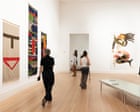
The massive retrospective of Gabriele Stötzer at Berlin’s Martin Gropius Bau change things. The exhibition, titled Dabei sein und nicht schweigen (Showing up and Not Remaining Silent), runs until December 6, 2026, and stands as the largest state-museum solo exhibition ever given to an East German female artist.
If you think this is just another dry, historical display of Cold War artifacts, you are completely missing the point. Stötzer’s work is loud, messy, and intensely tactile. At 73, she is finally receiving the official mainstream credit she deserved decades ago, culminating in her selection for the prestigious Goslarer Kaiserring prize in October 2026. Her art matters today because it shows exactly how to maintain personal identity when an entire system is trying to erase your individuality.
The Prison Walls That Created an Artist
Stötzer did not set out to be a radical avant-garde artist. She was a young woman studying to be a teacher in Erfurt during the mid-1970s. Everything changed in 1976 when she signed a petition protesting the expatriation of dissident singer-songwriter Wolf Biermann. The East German regime did not tolerate complaints. They kicked her out of college and arrested her.
She spent a brutal year locked up, including five months of pre-trial isolation and time in the notorious Hoheneck women’s prison in Saxony. For many, a year in Hoheneck would destroy their spirit. For Stötzer, it became an experimental incubator.
Locked up behind double walls—the Berlin Wall on the outside and the prison walls on the inside—she found a strange sort of community among the female political prisoners. It was an environment of forced solidarity. When you have absolutely nothing, your body becomes your only remaining asset. Stötzer realized that she could use her body as a primary site of resistance. She started writing down stories, capturing the raw reality of her cellmates, and laying the groundwork for a lifetime of radical creation.
The Erfurt Underground and Pocket Galleries
When Stötzer got out of prison in 1977, she made a deliberate choice that shocked many of her peers. She did not flee to the West. She stayed in the German Democratic Republic (GDR) because she wanted to use the state as an experimental space for feminist struggle.
She went underground, lived in an illegal squat, and began making art outside the official state channels. Because she refused to join the official GDR artists' association, she was legally barred from holding public exhibitions. So, she got creative. She started making artists' books. These were thick, handmade, scrapbook-style albums filled with raw text, drawings, and photos. She called them her "own little galleries." She would pass them hand-to-hand among a trusted circle of friends.
By the early 1980s, she co-founded the Künstlerinnengruppe Erfurt (Erfurt Women Artists' Group). This collective was a direct middle finger to the rigid patriarchs running the East German culture machine. They organized wild, underground fashion-object shows. Instead of expensive fabrics, they dressed up in black trash bags, scrap paper, and industrial junk. They painted their bodies in orgiastic patterns and filmed the results on Super 8 cameras.
The Stasi hated it. The secret police kept Stötzer under constant surveillance and regularly shut down the group's events. But the collective kept pushing. They used everything they had—their collective traumas, their housing squats, their bodies—to keep their own substance alive. Stötzer famously chose to buy expensive Super 8 film rolls instead of sausages, choosing artistic survival over physical comfort.
Redefining the Visual Record of the Eastern Bloc
Look closely at the 150 works displayed at the Gropius Bau. You see a stunning diversity of mediums that reject simple categorization. There are woven wool carpets, junk sculptures, intense black-and-white photographic self-portraits, and grainy films.
A major feature of the 2026 show is a massive, brand-new sculpture titled Undine kommt (Undine Comes). Built out of raw sheep's wool and ceramic elements, this larger-than-life figure brings her old drawings and performance costumes into a physical space. It stands entirely on its own, demanding attention.
Simultaneously, Berlin's Loock Galerie is running a parallel exhibition titled Beginnen im Rinnen der Zeit, which features another shocking new work: schwungvoll in linien (2026). It is a hand-painted Meissner porcelain toilet bowl. The piece directly confronts her time in the Erfurt pre-trial cells, where the exposed toilet bowl stood directly next to the beds, completely stripping prisoners of their privacy. By transforming an object of state humiliation into high-art porcelain, Stötzer takes back control of her own trauma.
This is why her current mainstream recognition is so important. For decades, Western art critics dismissed East German art as a minor, isolated phenomenon. But Stötzer’s work fits perfectly into the global history of feminist performance art. Her use of the body as a canvas mirrors what artists like Marina Abramović or Carolee Schneemann were doing in the West, but Stötzer did it with the constant threat of a prison sentence hanging over her head.
How to Engage With This History Today
If you want to understand the real depths of underground resistance art, do not just read about it in a textbook. Use these practical steps to experience it yourself.
- Visit the Gropius Bau Exhibition: The show runs in Berlin until December 6, 2026. Give yourself at least two hours to sit with her Super 8 films and flip through the replicas of her artists' books. Remember that the museum is closed on Tuesdays.
- Track Down the Monograph: Spector Books published a major bilingual monograph titled Gabriele Stötzer: Touching the Spirits alongside the exhibition. It provides essential context on her text pieces and performance history.
- Visit the Memorial Sites: If you are in Germany, travel to Erfurt and visit the former Stasi prison memorial, or head to the Hoheneck Women's Prison Memorial Museum in Saxony. Seeing the physical spaces where Stötzer was held entirely changes how you view the textures and scales of her textile and porcelain creations.
Gabriele Stötzer’s art is not a relic of a dead country. It is a living masterclass in psychological survival. She proved that even when you are completely broke and stripped of your rights, your creative voice can never be fully contained by a state.