The white house wants you to believe Pope Leo XIV is just another political opponent.
When Brian Burch, the U.S. Ambassador to the Holy See, went on record with The New York Times to claim that the pope’s blistering critiques of the war in Iran are merely the opinions of a secular head of state, he wasn't just spinning. He was executing a calculated diplomatic maneuver. By arguing that the pontiff acts as a "coequal with world leaders" ruling over a tiny patch of land in Rome, the administration tried to strip the world’s first American pope of his ultimate weapon: his moral authority.
The Vatican just blew that strategy to pieces.
In a rare and direct public pushback, Andrea Tornielli, the editorial manager for the Vatican's Dicastery for Communication, fired back with a scathing op-ed. While diplomatic protocol kept Tornielli from naming Burch directly, the target was unmistakable. The Vatican made it clear that when the pope demands an end to the arms race, slams a military campaign as failing the "just war" criteria, or calls out humanitarian crises, he isn't playing partisan politics. He's preaching the Gospel.
Trying to reduce the global leader of 1.4 billion Catholics to a mere politician isn't just bad theology. It shows a profound misunderstanding of how the Holy See actually operates.
The Temporal Trap
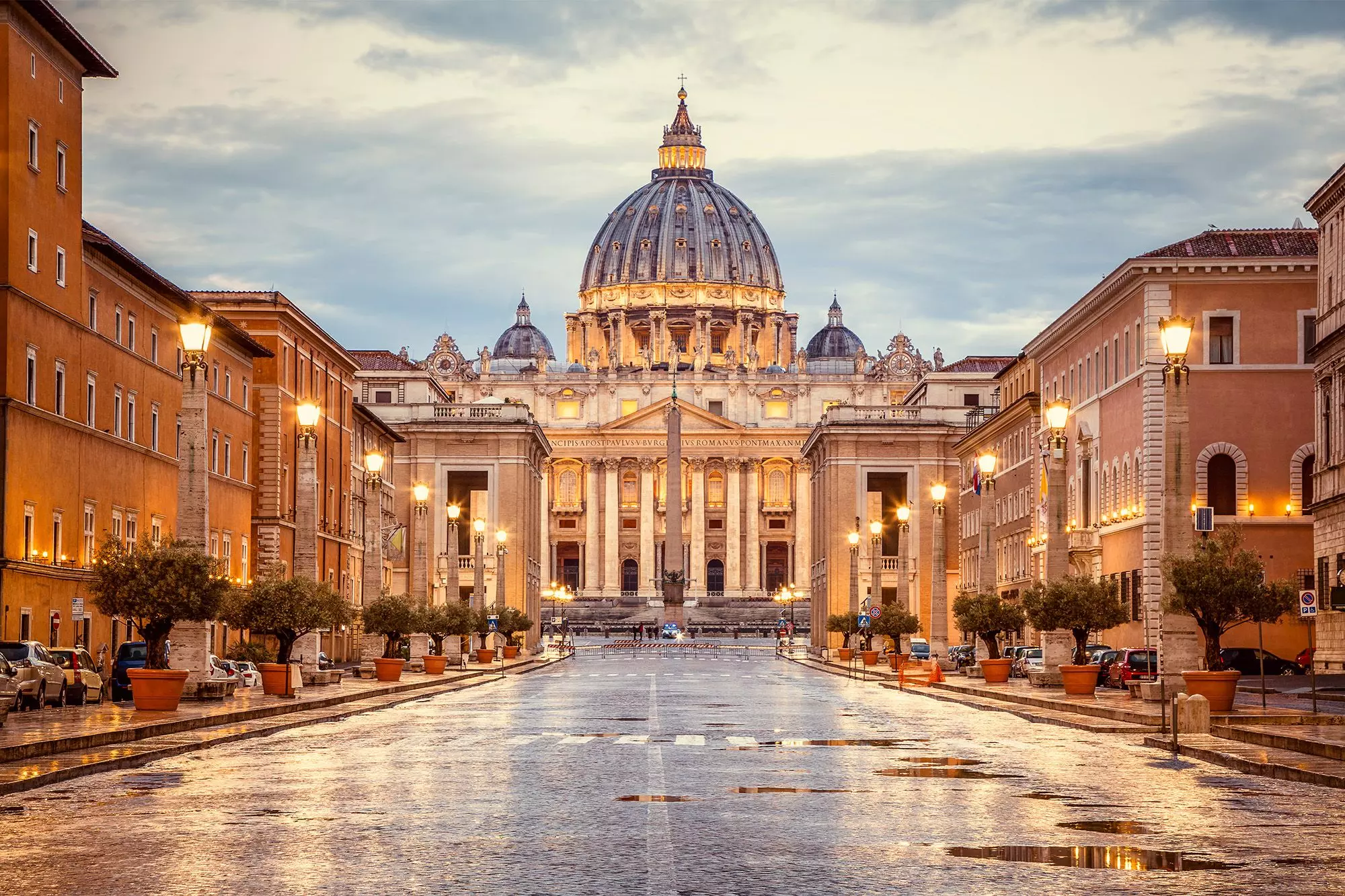
Secular governments have fallen into this trap for centuries. They look at Vatican City—a tiny sovereign state of less than half a square kilometer established by the 1929 Lateran Pacts—and assume the bishop of Rome is just another president with a micro-nation.
But that tiny patch of land exists for one reason only: to ensure the pope is completely free from the political interference of any single country. It's a shield, not a platform. When Paul VI addressed global leaders decades ago, he reminded them that the papacy possesses only a symbolic temporal sovereignty. It's the absolute minimum needed to exercise a spiritual mission.
When Ambassador Burch and the Trump administration try to frame Pope Leo’s critiques through a political prism, they're attempting to neutralize his words. If he's just another politician, then his opposition to the war in Iran or his condemnation of harsh migration policies can be written off as "liberal" talking points. In fact, the president took to Truth Social to do exactly that, calling Leo "a very liberal person" who needs to "focus on being a Great Pope, not a Politician."
But the Vatican's counter-offensive laid bare the flaw in that logic. Tornielli rightly noted that any exaggeration of the pope's role as a head of state is misleading. It intentionally comes at the expense of his true mission as a universal shepherd.
An American Pope Fighting an American War
What makes this clash unprecedented is the identity of the man in the white cassock. Born Robert Prevost in Chicago, Pope Leo XIV is the first American to ever hold the keys to St. Peter.
Before his election in May 2025, Leo spent decades serving outside the United States, including a long tenure in Peru. He doesn't view the world through a Washington lens, and he certainly isn't acting as the leader of the domestic political opposition. Yet, his background makes his critiques sting the White House even worse.
Consider the optics. The U.S. administration, heavily backed by conservative evangelical leaders, has frequently claimed a heavenly endorsement for its military campaign in Iran. When defense officials urge Americans to pray for victory in the name of Christ, and the president states he believes God approves of the war, Leo’s response lands like a sledgehammer.
During his Palm Sunday message, the pope didn't mince words. He cited the prophet Isaiah, warning that God does not listen to the prayers of those whose hands are full of blood. Later, aboard the papal plane, he looked reporters in the eye and stated plainly that he has "no fear" of the administration.
This isn't a political debate between coequal leaders. It's a fundamental clash of worldviews.
What Secular Analysts Constantly Get Wrong
If you're reading mainstream commentary on this feud, you're probably seeing it framed as a standard left-versus-right cage match. That's a lazy take.
The Catholic Church doesn't fit into the neat boxes of American politics. While Leo has been fiercely critical of the administration's foreign wars and immigration crackdowns, he's also maintained a traditional, cautious stance on divisive moral issues like abortion. He isn't auditioning to be a darling of the American progressive movement. He's operating from a centuries-old theological framework that prioritizes human dignity, multilateral diplomacy, and the preservation of life.
When the pope speaks out against a "technological arms race" or warns about the loss of humanity in the age of artificial intelligence, he isn't trying to win an election cycle. He's addressing systemic threats to human existence. Secular analysts who try to map these statements onto a political spectrum miss the deeper reality. The Vatican thinks in centuries; Washington thinks in two-year election cycles.
Navigating the Fallout
This public rift leaves American Catholic leaders in a deeply uncomfortable position. High-ranking officials within the administration now face a brutal balancing act: how to maintain loyalty to a president who openly attacks the pontiff while remaining faithful to the head of their church.
For the everyday observer trying to make sense of the geopolitical noise, the next steps are clear. Stop looking at Vatican statements through the lens of domestic partisanship. When analyzing international conflicts, look closely at whether global actors are seeking diplomatic "off-ramps" or doubling down on military escalations. The Vatican will continue to use its unique diplomatic status to push for negotiation and multilateralism, regardless of who sits in the Oval Office.
The White House can keep trying to demote the pope to the rank of a secular politician, but as the Vatican just reminded the world, you can't contain a global spiritual mission inside the borders of a micro-state.