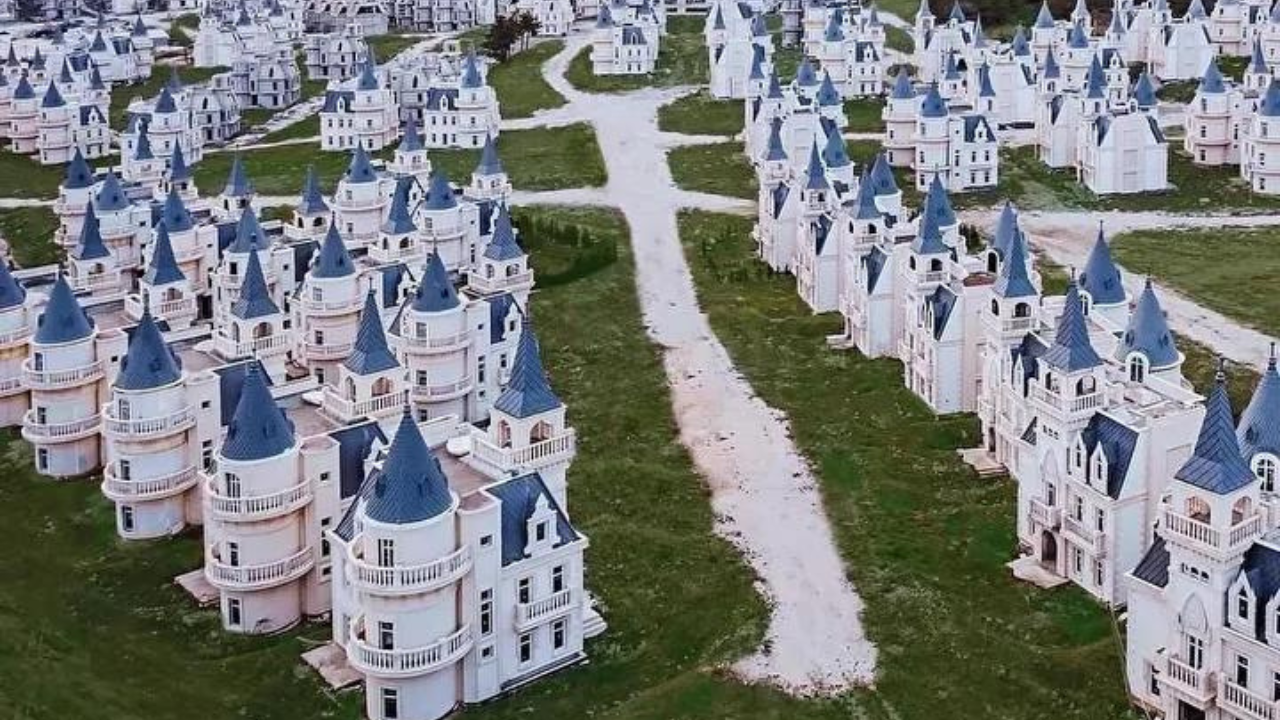
If you've spent more than five minutes on social media over the last few years, you've probably seen the eerie drone footage. Hundreds of identical, Disney-esque mini-castles sitting in a quiet Turkish valley, completely empty. The viral headlines usually claim the same thing: rich buyers bought up a fairytale town and mysteriously vanished overnight.
That's simply not true.
Nobody abandoned Burj Al Babas in secret. The real story is much more grounded in financial miscalculations, questionable design choices, and a massive real estate gamble that collapsed under its own weight.
The $200 Million Pitch
Back in 2014, the Sarot Group had a grand vision for Mudurnu, a quiet district in northwestern Turkey known for Ottoman-era wooden houses and hot springs. They set out to build a mega-resort called Burj Al Babas. The pitch targeted wealthy buyers from Gulf nations like Kuwait, Saudi Arabia, and Bahrain who wanted cooler summer retreats.
The master plan included 732 three-story villas, each priced between $370,000 and $530,000. These weren't standard vacation homes. They featured French château exteriors with Gothic turrets, ornate balconies, underfloor heating, and jacuzzi tubs on every floor. The developers even promised piped thermal water straight from local springs into private indoor pools, alongside a massive central complex with saunas, Turkish baths, and a shopping mall.
On paper, sales started strong. Around 350 units were sold upfront. Construction moved fast, with over 2,500 workers on site.
Then everything began falling apart.
Why the Fairytale Creation Crashed
By 2018, construction ground to a halt with 587 villas partially built. The project didn't fail because people moved out; it failed before anyone could ever move in.
Several major forces wrecked the development at once:
- The Turkish Lira Collapse: In 2018, Turkey faced a sharp economic downturn. The lira lost significant value, skyrocketing the cost of imported materials and raising interest rates on corporate debt.
- Declining Oil Prices: Economic shifts in the Gulf region meant several buyers defaulted on their installment plans or backed out entirely.
- Cheap Materials Under Luxury Façades: Despite the grand architectural promises, much of the construction relied on prefabricated materials. Polystyrene ornaments, plastic roofs on the turrets, and thin stone veneers created durability issues quickly.
- Local Backlash: Local residents and environmentalists fiercely opposed the project. The dense cluster of European mini-palaces clashed violently with the historic Ottoman architecture of Mudurnu.
When debt piled up past $5 million, Sarot Group filed for bankruptcy protection. Workers packed up, leaving concrete shells, unpaved dirt trails, and unused building supplies behind.
What the Site Looks Like Today
If you travel to the valley today, you won't find a grand gated community. You'll find a bizarre monument to overleverage.
From a high viewpoint, the rows of blue-grey turrets look almost painted. Step closer, though, and the illusion shatters. Many structures are bare concrete inside. Rainwater leaks through unfinished roofs. Wildflowers and tall weeds choke the gaps where manicured lawns were supposed to sit.
Because the central infrastructure was never finished—no paved roads, no functioning sewage lines, and no operational mall—the site remains entirely unlivable.
Ironically, the failure created a different kind of destination. Dark tourists, photographers, and drone enthusiasts regularly visit the perimeter to capture the surreal view of hundreds of identical abandoned castles sticking out of the forest.
What Happens Next for Burj Al Babas
Rebuilding or completing a project of this scale isn't simple. While rumors of foreign investors purchasing the debt surface every couple of years, completing hundreds of degrading concrete shells would require tens of millions in new funding.
If you're interested in visiting or tracking modern real estate cautionary tales, keep these practical points in mind:
- Do not expect open access: The site is privately owned, fenced off, and guarded. Sneaking inside can lead to structural hazards or legal trouble with security.
- View from public hills: The best and safest views of the complex are from the elevated dirt tracks north of the site, accessible by car from Mudurnu.
- Respect the local town: Mudurnu itself is a rich historical town with 130-year-old Ottoman architecture. If you visit the region, spend your time and money supporting the actual local community rather than just taking photos of the ruin.
Burj Al Babas stands as an expensive lesson in property development: aggressive debt, cheap materials, and alienating local culture rarely end happily ever after.