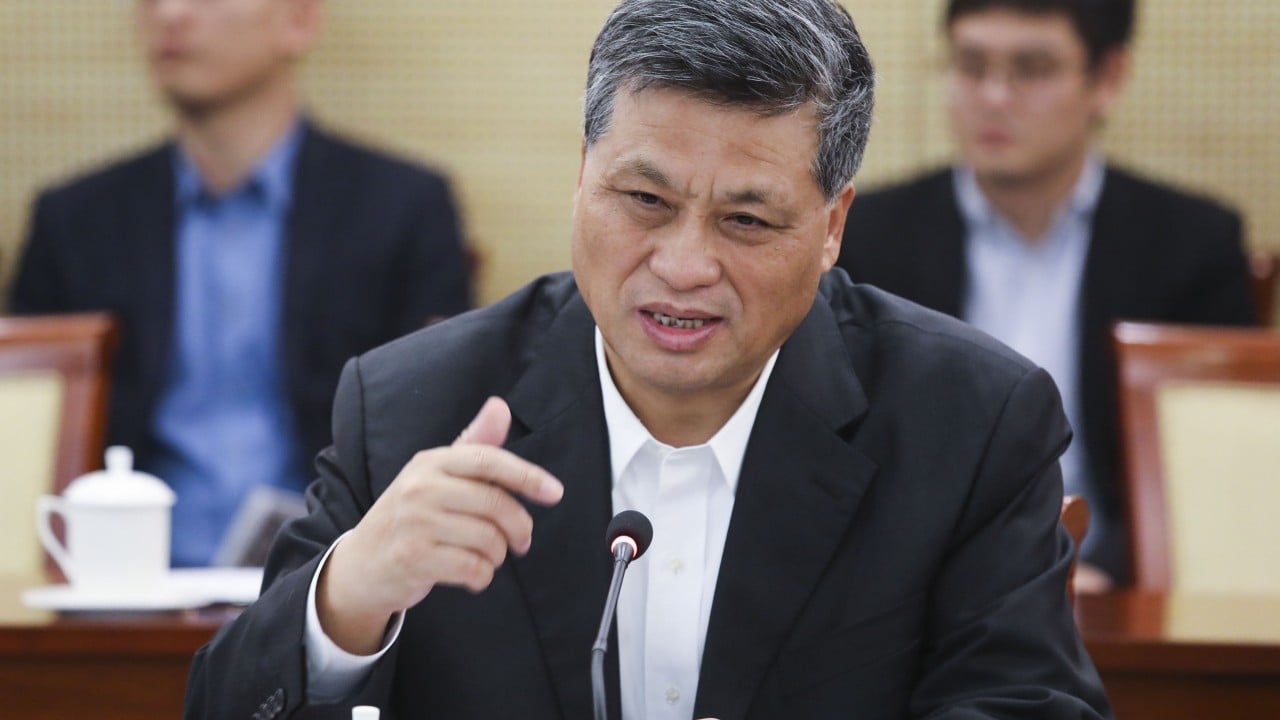
The downfall of a Chinese rocket scientist turned political heavyweight doesn't just disrupt Beijing's inner circle. It shifts the entire risk calculus for global businesses. On July 14, 2026, state media confirmed the total expulsion of Ma Xingrui from the Chinese Communist Party. He was a sitting Politburo member and the former chief of the strategic Xinjiang region. The official charges drop a hammer on what Beijing calls massive family corruption.
If you think this is just another routine political cleanup inside the Great Hall of the People, you are missing the bigger picture. Ma wasn't just a bureaucrat. He belonged to China's elite technocratic class, a man who literally ran the country's aerospace programs before managing its most geopolitically sensitive territory.
His removal marks the third sitting Politburo member to fall since 2025. This tells us that the top leadership is willing to tolerate massive internal instability to enforce absolute discipline. For international executives, investors, and supply chain managers, this brings a loud warning. The political ground in China is shifting faster than ever.
The Anatomy of Family Corruption
The Central Commission for Discipline Inspection didn't hold back on the details. They accused Ma of transforming public power into a personal piggy bank. According to the state broadcaster, Ma allowed his family members to use his immense political clout to secure massive financial returns.
The specific findings paint a picture of systemic abuse. Ma allegedly helped relatives buy prime real estate at deeply discounted, below-market prices. He manipulated personnel decisions to secure jobs and promotions for his circle. He traded state project contracts for massive bribes. The investigation even noted transactions involving power for sex and money for sex.
When the initial party inquiries began, Ma reportedly tried to hide the truth rather than confess. That alone sealed his fate. In the current political climate, cover-ups are treated as active treason against the party line.
Why the Rocket Scientist Label Matters
To understand why this ruins the old playbook, you have to look at Ma's background. Before entering politics, he was a genuine star in China's defense and aerospace sectors. He led the China Aerospace Science and Technology Corporation. He was a key brain behind the country's celebrated moon missions.
For a long time, foreign analysts believed these highly skilled technocrats were safe. The logic went that Beijing needed competent scientists and engineers to drive its high-tech self-reliance goals, meaning they would be spared the worst of the political purges.
That theory is dead. Ma's expulsion proves that technical brilliance and administrative necessity offer zero protection. If a top rocket scientist running a crucial border region can be wiped off the political board overnight, nobody is untouchable.
The Domino Effect on Global Supply Chains
Ma's most recent major assignment was running Xinjiang from 2021 to 2025. This region sits at the center of international scrutiny over human rights and global supply chains, specifically regarding solar components, textiles, and agricultural exports.
During his tenure, Ma actually tried to pivot the region toward economic development and ease some of the overt security pressures. His sudden removal, followed by the fall of his former subordinates like Chen Weijun in Xinjiang and Guo Yonghang in Shenzhen, creates a massive power vacuum.
When a top official falls for project contracting corruption, every single business deal, state contract, and joint venture they touched goes under the microscope. If your supply chain relies on approvals or infrastructure tied to Ma's tenure in either the high-tech hub of Shenzhen or the industrial zones of Xinjiang, your regulatory risk just spiked.
How to Protect Your Operations Moving Forward
Waiting for official state media announcements means you're already too late. You need a proactive approach to manage this environment.
- Audit all regional political ties. Review any major corporate partnerships, land acquisitions, or project concessions signed in Shenzhen or Xinjiang during Ma's leadership years. Ensure your local partners aren't suddenly named in expanding local investigations.
- Stop relying on technocratic immunity assumptions. Do not assume a Chinese partner or official is safe just because they run a critical high-tech or scientific sector. Treat tech and aerospace with the same high regulatory risk profile as finance or traditional manufacturing.
- Monitor the lower-tier dominoes. Watch the local disciplinary announcements in Guangdong and Xinjiang. The fall of a Politburo giant always triggers a wave of secondary investigations into lower-level bureaucrats who actually signed the business permits.
The era of predictable political risk in China is over. Survival requires assuming that any local regulatory environment can change in a single afternoon.