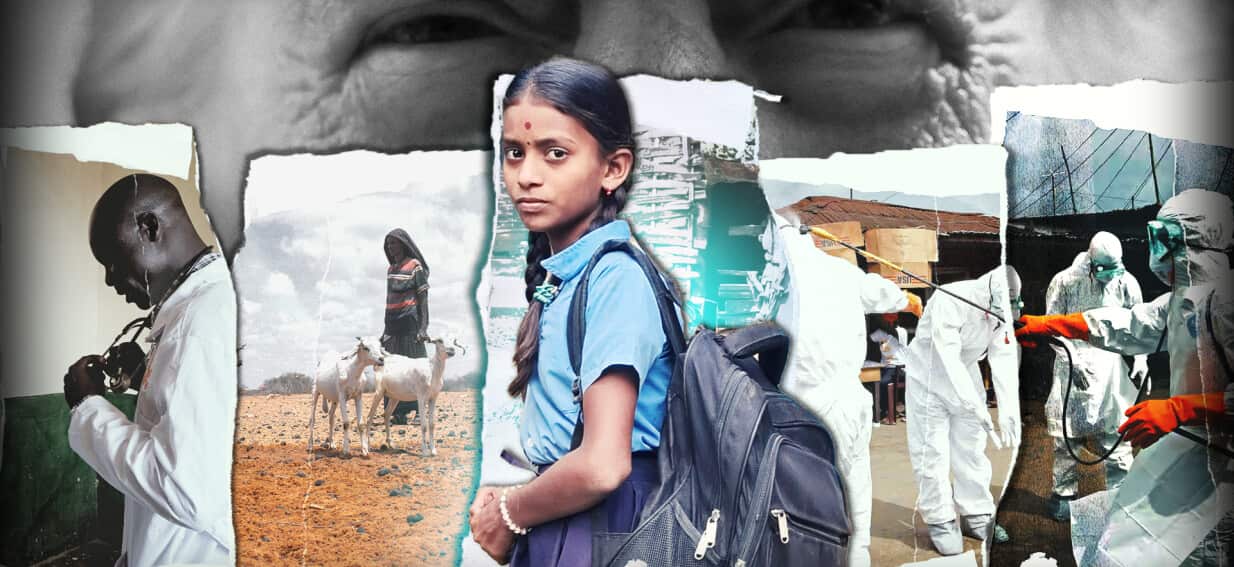
On January 20, 2025, a stroke of a pen in Washington, DC changed the fate of a 13-year-old girl named Radhika Yadav in Nepal. It wasn't a policy aimed at her village, but the shockwaves hit her instantly. President Donald Trump ordered a near-total freeze on United States foreign aid. Months later, on July 1, 2025, the United States Agency for International Development (USAID) shut down entirely.
Exactly one year after the world's largest aid agency was dismantled, the true cost of this policy is coming into view. It isn't just about ledger balances or belt-tightening in Washington. It's about empty classrooms, rising child marriage numbers, and predictable, preventable deaths.
The Quiet Collapse of a Nepali Classroom
Radhika Yadav didn't want to become another statistic. Nepal houses roughly five million child brides. At 13, Radhika knew her time was ticking away before she'd be forced into an early marriage. Her only way out was UDAAN, an intensive 11-month education program run by CARE International. It was built for girls who had dropped out or never stepped inside a school, offering them a bridge back to formal education.
Then the money stopped.
Because the US pulled its foreign aid, UDAAN lost its funding and closed overnight. Radhika and 307 other young girls were sent right back to doing household chores. Her mother, Sundar Kala, watched her daughter's newfound confidence vanish. Without school, the math is simple and brutal: families under intense financial strain prioritize sons, and daughters face an immediate threat of early marriage, human trafficking, or forced domestic labor in India and the Gulf states.
The crisis stretches far beyond one village in Nepal. Around 12 million girls worldwide marry before turning 18 every single year. The Institute of Global Politics reports that these massive foreign assistance drops are actively rolling back decades of hard-won progress. UNICEF USA dropped a staggering estimate: steep global education cuts could push six million more kids out of school by the end of this year.
Shuttering the World's Biggest Donor
When USAID was dissolved and 83% of its programs were spiked—with the remaining scraps handed over to the State Department—the international humanitarian system fractured. We're talking about an agency that saved an estimated 91.8 million lives over two decades, according to a study published in The Lancet. It targeted HIV/AIDS, malaria, tuberculosis, and extreme malnutrition.
Data from the Center for Global Development (CGD) shows that we are entering a terrifying new phase of public health crises. Eeshani Kandpal, a senior fellow at CGD, points out that while empirical data takes time to compile, the real-world effects are already glaring. Disease outbreaks are getting deadlier because funding for basic sanitation, clean water, and hygiene evaporated. Look at sub-Saharan Africa. A cholera outbreak in 2025 started at the same baseline levels as previous years but ended up far more fatal because the infrastructure to fight it was gone.
The Invisible Ripples Across Global Hotspots
If you think this is just an issue for development academic circles, look at the ground reality in active conflict zones and refugee camps.
- Democratic Republic of Congo: In the eastern DRC, where a brutal war has displaced millions, the UN World Food Programme had its budget slashed. Sixty percent of humanitarian workers are gone. Over 26 million people face severe food insecurity.
- Somalia: Farmers and herders like Tahliil Abdulahi Cali have watched their livestock dwindle due to multi-year droughts. With US aid gone, local climate resilience programs collapsed, leaving families with nowhere to turn but overcrowded displacement camps.
- Syria and Bangladesh: In Syria's al-Hol and al-Roj camps, management resources dried up. In the Rohingya refugee camps in Bangladesh, the exit of UN agencies sparked immediate dengue fever outbreaks due to a lack of basic hygiene kits.
- Afghanistan and Haiti: Hundreds of medical clinics across Afghanistan closed their doors permanently. In Haiti, clinics lost the funding required to distribute contraception, PrEP, and vital HIV education.
The direct correlation between American isolationism and global instability is no longer a warning theory. It's happening.
What Happens Next
The global humanitarian landscape has changed permanently, and relying on a single superpower to fund global health and education was always a fragile strategy. Moving forward, the international community has to pivot to decentralized, diversified funding structures.
If you want to track or mitigate these impacts, follow the ongoing data modeling from the Center for Global Development and support independent non-governmental organizations like CARE International or Médecins Sans Frontières (MSF). They are currently trying to patch a massive, systemic dam breach with very limited resources. The reality of 2026 is that Washington isn't coming back to save these programs anytime soon. Local and European coalitions must step up to fill the void, or the human toll will keep climbing.



.png)