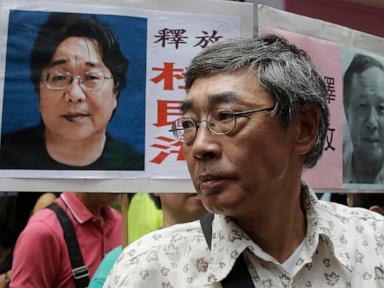
A quiet tragedy just played out in a Taipei hospital room, and it says everything about the current state of geopolitical defiance. Lam Wing-kee, the wiry, grey-haired founder of Hong Kong’s famous Causeway Bay Books, passed away at the age of 70.
He didn't die in his hometown. He died in exile.
Lam suffered a severe recurrence of lung cancer last year, which eventually advanced to stage four. He was admitted to Mackay Memorial Hospital on Tuesday, fell into a coma by Wednesday, and was pronounced dead on Thursday evening, July 2, 2026. While he had no immediate family with him in Taiwan, a close-knit group of fellow Hong Kong exiles stood by his bedside during his final moments. Taiwan's President Lai Ching-te quickly issued a public statement honoring Lam, noting that his ordinary yet steadfast courage reminded the world exactly how precious freedom is.
But Lam wasn't just another name in the obituary section. He was the man who blew the whistle on China's terrifying system of cross-border abductions, a brave move that shattered the illusion of safety for political dissidents everywhere.
The Night a Bookseller Vanished
To understand why Lam’s death is hitting the global human rights community so hard, you have to look back to late 2015. Lam was running Causeway Bay Books in Hong Kong, a tiny shop famous for selling gossipy, critical political titles banned in mainland China. The books exposed everything from corruption scandals to the messy private lives of top Chinese Communist Party officials.
Then people started disappearing.
Between October and December 2015, five staff members and shareholders linked to the bookstore vanished without a trace. It wasn't just a local operation. One owner, Gui Minhai, was snatched straight out of his holiday apartment in Thailand. Lam himself was grabbed in October 2015 right after he crossed the border into Shenzhen.
The security apparatus didn't just arrest him; they completely erased him. Lam later revealed that he was blindfolded and forced onto a grueling 13-hour train ride to the eastern city of Ningbo. For five agonizing months, he was kept under total 24-hour surveillance by rotating guards in a single room. He was isolated, psychologically broken, and eventually forced to record a scripted, televised confession admitting to distributing unauthorized books.
The Press Conference That Changed Everything
In June 2016, Chinese authorities allowed Lam to return to Hong Kong on one condition: he had to fetch a hard drive containing the bookstore's customer list and bring it back to the mainland. If he complied, he would compromise thousands of mainland readers who bought banned political literature.
Lam walked out of the airport, looked at his home city, and chose defiance.
Instead of grabbing the drive and heading back to the border, he skipped bail. He walked straight into a packed press conference in Hong Kong and laid bare the entire operation. He blew the lid off the "Central Investigation Team," detailed his blindfolded kidnapping, and exposed the forced television confessions as total theater.
It was an explosive moment. Nobody did that to Beijing and lived to tell the tale. His testimony gave the world concrete, chilling proof that China was actively violating the "One Country, Two Systems" framework by kidnapping people right out of autonomous zones.
Hunting for Safe Haven in Taipei
By 2019, the ground in Hong Kong was shifting rapidly. The local government tried to pass a highly controversial extradition bill that would allow political targets to be sent straight into the mainland's opaque legal system. Lam knew his time was up. He fled to Taiwan before the bill could pass, cutting off contact with old friends back home just to keep them safe from state retaliation.
He didn't stop fighting when he arrived in Taipei. In 2020, he used crowdfunding to open a new version of Causeway Bay Books in Taipei's Zhongshan District, later moving it to the Zhongzheng District in 2024.
The shop became a physical sanctuary. If you walked in, you'd find walls plastered with protest notes, books on the Umbrella Movement, and literature analyzing authoritarian tactics. It became a living embassy for the Hong Kong diaspora.
But freedom in exile came with a heavy price. Right before the shop opened in 2020, a man threw red paint over Lam in a Taipei street—a blunt warning that Beijing’s long arm uses local proxies even in democratic territories. Lam frequently warned his Taiwanese hosts to stay alert, famously telling journalists that if authoritarian forces successfully swallowed Hong Kong, Taiwan would be the very next target on the list.
What Lam Wing-kee Left Behind
Lam’s health forced him to temporarily close his Taipei bookshop last December. In June, he admitted to reporters that he simply couldn't give a timeline for its reopening, acknowledging his fate with a trademark, clear-eyed realism. Earlier this week, a anonymous young man from Hong Kong left a single white rose outside the shuttered bookstore's entrance.
Lam’s passing leaves a massive void, especially since the remaining members of the Causeway Bay five are either silenced or locked away. Gui Minhai, for instance, was sentenced to a brutal 10-year prison term in China in 2020 on charges of illegally providing intelligence overseas.
If you want to honor Lam's legacy, don't just read about him. Act on the realities he spent his life exposing.
- Support independent bookstores and publishers that carry titles banned in authoritarian states. Outposts like the relocated Causeway Bay Books survive entirely on community support.
- Stay informed on cross-border repression. Keep tabs on reports from organizations like Freedom House or Safeguard Defenders, which track how authoritarian regimes target dissidents living abroad.
- Protect digital privacy. If you read or distribute sensitive political material, use encrypted communication tools like Signal and secure virtual private networks to shield your digital footprint.
Lam proved that an ordinary citizen with a shop full of paperbacks can terrify a global superpower. His bookstore may be quiet now, but the hard truth he uncovered remains entirely exposed.