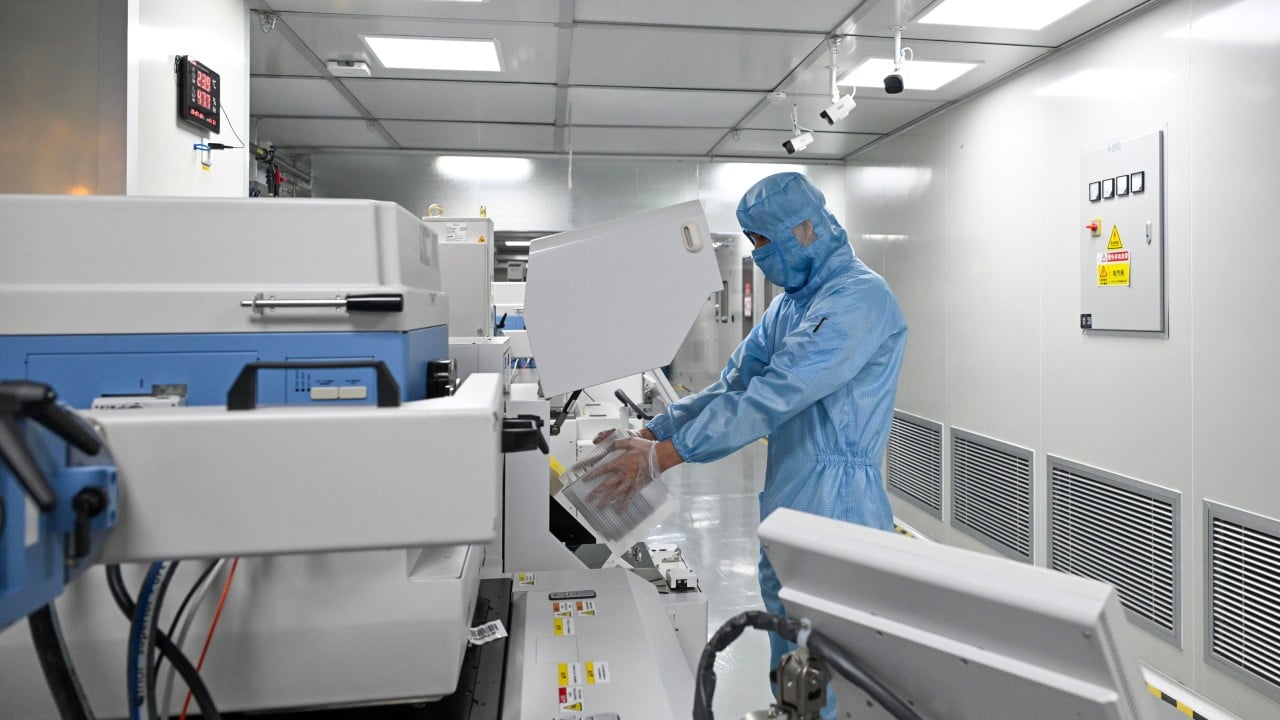
China just dropped trade data that should have western tech executives sweating through their tailored suits. Look at the raw headlines from early July 2026 and you see an absolute powerhouse. Driven by an insatiable global appetite for hardware, China's total exports spiked 27% in June alone.
But the real kicker lies in the silicon. During the first half of 2026, China's chip exports practically doubled. Trade in electronic components and computer parts shot up 57% to a staggering 5.1 trillion yuan, roughly $760 billion, according to Wang Jun, vice minister of China's General Administration of Customs. If you found value in this post, you should look at: this related article.
If you just read the superficial headlines, you'd think Beijing won the semiconductor wars. You'd assume the US blockades failed miserably.
You'd be wrong. For another look on this development, see the recent coverage from Gizmodo.
When you strip away the political grandstanding and look at what is actually moving across the docks in Shanghai and Shenzhen, a completely different reality emerges. This isn't a triumph of cutting-edge domestic innovation. It's a massive, fragile system keeping a struggling domestic economy on life support.
The Cheap Silicon Illusion
Let's clear up a massive misconception right away. China isn't suddenly exporting mountains of the ultra-advanced, 3-nanometer processors used to train the world’s leading large language models. Washington’s export curbs largely blocked their access to the extreme ultraviolet lithography machines needed for that.
Instead, China is flooding the world with "legacy chips."
These are the 28-nanometer, 45-nanometer, and even older legacy nodes. They are the blue-collar workers of the technology world. They go into your smart toaster, your EV's power window controller, medical monitors, and industrial machinery. As the global tech supply chain aggressively adopts AI, every single smart device needs more of this basic silicon to connect to the cloud.
China has built an overwhelming, dominant capacity in these older nodes. Because domestic consumer demand inside China has absolutely cratered—car sales fell 22% earlier this year and retail growth is flat—Chinese factories have no choice. They must export or die.
So, they are dumping legacy silicon onto the global market at rock-bottom prices. It keeps the factory lights on, but it isn't the high-margin, high-tech victory Beijing claims it is.
The High Cost of Keeping Up
The second illusion in these stellar export numbers is the import data.
While China's exports rose 27% in June, their imports absolutely rocketed by 36%. That is a five-year high. Why is a country with supposedly world-class domestic chip capabilities importing so much?
Because to build the AI servers they do export, Chinese assemblers must import high-end components they still can't manufacture themselves. Look at where those imports are coming from:
- South Korea: Imports jumped 85% year-on-year in June. South Korea is the world capital of advanced high-bandwidth memory (HBM) chips, crucial for AI servers.
- Taiwan: Imports rose over 41% during the same period. Taiwan remains the undisputed king of advanced foundry logic.
Basically, China is acting as a massive, low-margin assembly line. They import expensive, advanced components from their neighbors, pack them into servers, and export them.
Furthermore, the price of memory has absolutely ballooned. In local tech hubs like Shenzhen, the AI boom drove a fivefold spike in the cost of key memory products. Much of that export growth is simply inflation in the price of components China had to buy from somewhere else first.
The Approaching Tariff Wall
If you're an executive relying on this cheap hardware, don't get comfortable. This boom is highly fragile.
A massive portion of the recent export spike isn't organic demand. It's "front-loading." With trade tensions boiling over in both Europe and the US, international buyers are terrified of incoming trade barriers. They are panic-buying Chinese components right now to build up inventories before the doors slam shut.
We are already seeing the cracks. To bypass heavy tariffs, Chinese companies are frantically shifting assembly operations to Southeast Asia, Mexico, and parts of Europe. Exports to Southeast Asia surged nearly 35% in June as these trade rerouting networks solidified.
Once those inventories are full, or once the new tariffs officially land, this artificial demand will face a sharp cliff.
What to Do Next
If your business relies on hardware, electronics, or smart components, you can't ignore these dynamics. Here is how to navigate the shifting terrain:
- Audit your legacy silicon exposure. Do you know where the basic microcontrollers in your products actually come from? If they are sourced from China, start validating secondary suppliers in Vietnam, India, or Malaysia immediately.
- Brace for component price volatility. With memory prices swinging wildly due to localized shortages, lock in your hardware procurement contracts for the next 12 to 18 months now rather than relying on spot markets.
- Monitor the tariff timelines. Don't get caught in the front-loading rush. Factor potential 25% to 50% tariff hikes into your mid-term budget projections for any electronic assemblies originating from Chinese ports.