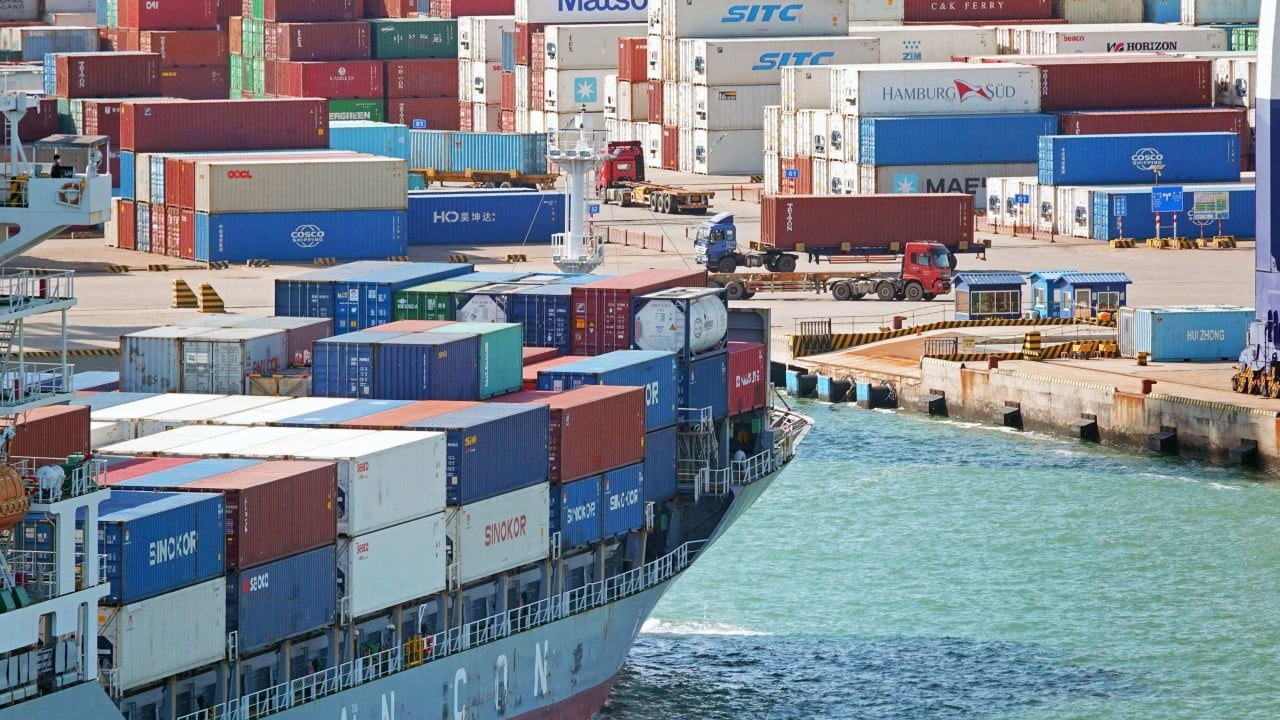
Walk into almost any major port along the African coastline, and you'll see massive concrete berths, towering cranes, and heavy machinery financed by Beijing. For years, the global conversation focused entirely on this physical infrastructure. Critics warned about "debt-trap diplomacy," while proponents cheered on much-needed modernization.
But looking only at the concrete misses the real shift happening right now.
A study from the Africa Centre for Strategic Studies reveals that China's footprint in African maritime networks has quietly evolved. It's no longer just about building docks; it's about controlling the brains behind them. Chinese firms are deeply embedding themselves into the software, automation systems, and artificial intelligence tools that dictate how cargo moves across the continent.
If you control the code, you control the trade. Western nations are suddenly realizing they're years behind in a quiet technological capture of vital shipping lanes carrying $350 billion in annual commerce.
The Digital Architecture of Maritime Control
For decades, European and American giants like Siemens and Kaleris (which owns the widely used Navis port software) dominated the maritime tech ecosystem. If a port wanted to track containers or automate its gates, it bought Western tools.
That monopoly is breaking down fast.
Chinese tech companies like Huawei are pitching all-in-one digital upgrades that Western competitors can't touch financially. They aren't just selling a piece of software; they offer a bundled package that integrates proprietary 5G networks, autonomous driving trucks, smart gate sensors, and customs coordination software. Even better for cash-strapped governments, these upgrades come with state-backed financing from Chinese policy banks.
This digital package links directly into Logink, China's state-backed logistics data network.
When an African port integrates these systems, it gains immediate efficiency. Turnaround times drop. Human error disappears from gate operations. But it also plugs the port directly into a centralized data pipeline controlled by Beijing.
[Traditional Port Model]          [Modern Chinese Integrated Port Model]
Western Software (Navis/Siemens)   Huawei 5G + Chinese AI Automation Systems
          │                                         │
   Local Operations                          Logink Logistics Data Platform
          │                                         │
   Fragmented Data                           Centralized Global Shipping Intelligence
Why Software Stickiness Is a Geopolitical Trap
Building a concrete pier is a one-time transaction. You pour the cement, you pay the bill, and eventually, the contractors pack up and go home. Software doesn't work that way.
When a port adopts proprietary Chinese automation systems, it creates a long-term dependency. AI algorithms handling container stacking, autonomous crane movements, and sensor perception require constant updates, debugging, and technical support. John Calabrese from the Middle East Institute points out that this control makes Chinese firms indispensable long after the construction crews leave.
It creates massive commercial and political leverage.
If a government falls out of favor with Beijing, it faces the terrifying prospect of having its primary economic gateway compromised. You can't just swap out a port's digital nervous system overnight. Switching back to Western software means ripping out the sensors, rebuilding the database architectures, and retraining the entire workforce. It costs millions and causes months of shipping delays.
Furthermore, more than 30 African countries now utilize China's BeiDou satellite navigation system instead of, or alongside, the American GPS network for primary maritime tracking. This isn't just a technical preference; it's a strategic decoupling from Western tech infrastructure.
Commercial Profits or Naval Strategy
We need to look closely at where these investments are clustered. These digitized ports sit directly along the world's most critical maritime choke points: the Gulf of Aden, the Gulf of Guinea, and the Cape of Good Hope.
David Shinn, a China-Africa expert and professor at George Washington University, argues that while profit drives most of these projects, they concurrently offer strategic advantages for the Chinese military. The People's Liberation Army Navy (PLAN) has run anti-piracy operations in the Gulf of Aden since 2008, using its base in Djibouti. By securing data dominance over nearby ports, China gains deep visibility into global shipping traffic.
They know exactly what cargo is moving, where it's going, and who owns it long before the ships arrive at their destinations.
The Path Forward for African Sovereignty
African nations shouldn't have to choose between digital stagnation and technological dependence. To maintain real autonomy over their trade networks, port authorities must take immediate steps to safeguard their digital assets.
- Enforce Open-Weight AI Architecture: Instead of buying completely locked, proprietary software packages, governments should mandate the use of open-source or open-weight AI models. This allows local engineers to host systems on local servers, protecting sensitive trade data and reducing long-term vendor lock-in.
- Implement Strict Data Sovereignty Frameworks: Port contracts must explicitly state that all operational, logistics, and customs data remains the sole property of the host nation. Third-party contractors should have zero rights to export this intelligence to external databases like Logink without explicit, case-by-case approval.
- Mandate Local Tech Transfer: Any contract signed with foreign tech firms must include mandatory, comprehensive training pipelines for local developers and cyber experts. The goal should be complete operational independence within five years of system deployment.
Relying on a single foreign superpower to run the digital nervous system of your economy is a massive gamble. True modernization requires owning the data that builds your country's future.