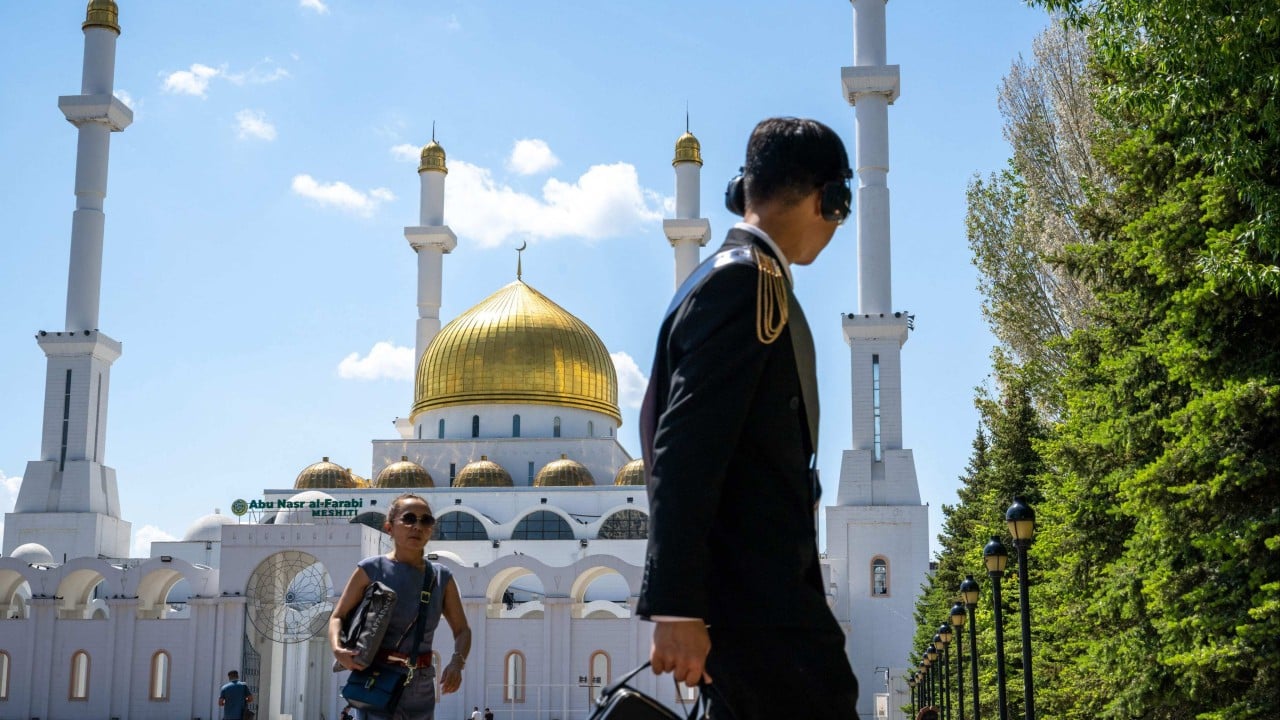
For over a century, western historians loved to talk about Central Asia as a mere playing board. They called it the Great Game. It was a neat, lazy framework where the British and Russian empires moved pieces across maps, ignoring the people who actually lived there. After the Soviet collapse, the commentary barely changed. Analysts just swapped Britain for China or the United States, treating the five independent republics as passive prizes to be won.
That framework is dead. Anyone still looking at Central Asia through the lens of external domination simply isn’t paying attention.
The reality in 2026 is that Kazakhstan, Uzbekistan, Turkmenistan, Kyrgyzstan, and Tajikistan aren't anyone's puppets. They’ve spent the last few years masterfully playing global superpowers against each other. Instead of getting crushed by the rivalries between Washington, Beijing, and Moscow, these nations use the friction to secure investments, build infrastructure, and assert their own sovereignty. It’s a masterclass in multi-vector diplomacy.
The Illusion of the Russian Backyard
Moscow long considered Central Asia its exclusive sphere of influence. Russian is still widely spoken, millions of Central Asian migrant workers power the Russian economy, and security alliances like the Collective Security Treaty Organization (CSTO) tied these states to the Kremlin.
Then 2022 happened. Russia's invasion of Ukraine changed everything.
It forced Central Asian leaders to take a hard look at their security dependencies. They didn't fall in line. Kazakhstan flatly refused to recognize the independence of Russia’s proxy regions in eastern Ukraine. Kazakh President Kassym-Jomart Tokayev said this directly while sitting next to Vladimir Putin at an economic forum. It was a public display of independence that shocked traditional observers.
Diversifying the Flow of Oil and Gas
Look at how Kazakhstan handles its energy exports. Historically, almost all Kazakh crude oil flowed through Russian pipelines to European markets. Relying on a single transit country that is heavily sanctioned and politically volatile is a terrible strategy.
Kazakhstan actively expanded the Trans-Caspian International Transport Route. People call it the Middle Corridor. This bypasses Russia entirely, moving goods across the Caspian Sea through Azerbaijan and Georgia into Europe. It’s more expensive than the old northern routes. It requires complex maritime logistics. But it buys independence. Western energy giants like Chevron and ExxonMobil, which hold massive stakes in Kazakhstan’s Tengiz oil field, are heavily backing these diversification efforts.
Uzbekistan has taken a similar pragmatic path. Under President Shavkat Mirziyoyev, Tashkent dismantled its old isolationist policies. The country is courted by everyone. Mirziyoyev signed massive trade and energy deals with Moscow to import Russian gas during winter shortages, but he simultaneously secured billions in Western investments for renewable energy projects. It isn’t about picking a side. It’s about building a portfolio where no single power can pull the plug on the Uzbek economy.
The Chinese Economic Juggernaut Without the Political Shackle
As Russia’s economic leverage weakened, China stepped in with an open checkbook. Beijing needs Central Asia for two reasons. It needs resources, and it needs secure land routes to European markets to hedge against potential maritime blockades in the Malacca Strait.
The numbers tell the story. China’s trade with the five Central Asian nations skyrocketed past 89 billion dollars annually. The China-Central Asia Summit format regularized direct meetings between Xi Jinping and regional leaders, bypassing Moscow entirely.
Infrastructure on Regional Terms
You might think this makes Central Asia a vassal of Beijing. It doesn't. Regional leaders learned from the mistakes of other developing nations that fell into severe debt traps.
Kyrgyzstan and Tajikistan owe significant portions of their foreign debt to the Export-Import Bank of China. That’s a real risk. However, Bishkek and Dushanbe are pushing back. They are demanding that new infrastructure projects use local labor rather than imported Chinese workers. They are negotiating equity stakes in mines and railways instead of just taking out loans.
The long-delayed China-Kyrgyzstan-Uzbekistan railway is a prime example. For twenty years, it sat on a shelf because Russia opposed a rail line that bypassed its territory and used a different track gauge. The Central Asian republics pushed it through anyway. Construction began because the regional states demanded the connection to diversify their trade routes. They managed to secure Chinese funding without signing away sovereign control of the transit corridors.
Western Substandard Engagement Meets Local Realism
Washington and Brussels want a piece of the action too. They keep launching initiatives with catchy names, like the American C5+1 framework or the European Union’s Global Gateway strategy. They hold high-level summits and promise deeper cooperation.
But Western policy often stumbles over its own contradictions. The West wants Central Asian nations to enforce sanctions against Russia, stop the re-export of dual-use electronics, and distance themselves from Beijing. At the same time, Western investment rarely matches the sheer scale of Chinese capital or the historical reality of Russian geographic proximity.
Central Asian diplomats see right through this. They know they can’t change their geography. They live between two nuclear-armed giants. Expecting them to completely cut ties with Russia or China is an absolute non-starter.
How the Republics Balance the Pressure
They handle Western pressure with incredible bureaucratic finesse. When the US Treasury Department threatens secondary sanctions on Kazakh or Uzbek banks for facilitating sanction-evasion schemes, the local regulators tighten compliance just enough to satisfy Western watchdogs. They freeze specific accounts and issue warnings. Then, they quietly establish new trading firms or alternative payment mechanisms to keep the essential cross-border trade flowing with Russia.
It’s an delicate balancing act. They give the West enough cooperation on sanctions and counter-terrorism to keep the relationship warm. In return, they demand investment in their local tech sectors, water management systems, and education. They aren't choosing the West over the East. They are using the West as a counterweight so neither Moscow nor Beijing gets too comfortable.
Internal Consolidation is the True Defense
The biggest reason the old imperial mindset fails to understand modern Central Asia is that it ignores the internal evolution of these societies. The five republics aren't a monolithic block, and they aren't the fragile states they were in the 1990s.
They are actively fixing long-standing internal disputes to present a united front to the outside world. For decades, border disputes in the Fergana Valley caused sporadic military clashes between Kyrgyzstan, Tajikistan, and Uzbekistan. Water rights were a constant source of tension. Imperial powers regularly exploited these ethnic and territorial fractures to maintain control.
That strategy is losing its teeth. Uzbekistan and Kyrgyzstan successfully swapped territories to completely resolve their border demarcation. Regular consultative meetings between the heads of state are now standard practice. When external actors try to stoke regional tensions, the local leadership handles it directly through bilateral channels. They realized that internal instability is the open door through which foreign empires march.
The Strategy for Navigating the New Multi-Polar Order
If you are a business leader, diplomat, or investor trying to understand or operate in this region, you need to throw away the old geopolitical playbook. The assumptions of the past will lead to expensive mistakes.
First, stop treating Central Asia as a transit zone. These countries want localized manufacturing, value-added processing, and technology transfers. If you only want to extract raw materials or move freight containers through their territory without investing in local processing plants, you will lose out to competitors who are willing to build local factories.
Second, recognize the distinct differences between the republics. Kazakhstan is a sophisticated financial hub aiming for middle-income status. Uzbekistan is a massive domestic market undergoing rapid industrialization. Turkmenistan remains an idiosyncratic, gas-rich autarky that requires unique diplomatic navigation. Treating them as a single entity guarantees failure.
Your next step should be evaluating projects based on regional agency. Look at initiatives that strengthen the Middle Corridor or enhance intra-regional water and energy cooperation. Those are the projects that will receive priority government backing because they directly serve the sovereign survival strategies of these independent states. The era of playing empires off each other has evolved into a sophisticated science, and Central Asia is running the lab.