The ground just shifted underneath the Vatican, and it happened in a picturesque meadow in the Swiss Alps.
On July 1, 2026, an ultra-traditionalist group called the Society of Saint Pius X (SSPX) went ahead and ordained four new bishops in Écône, Switzerland. They did this despite explicit, public warnings from Pope Leo XIV. The very next day, the Vatican dropped the hammer. The Dicastery for the Doctrine of the Faith declared a formal schism, announcing that the bishops who performed the ceremony, the four new bishops, and the priests and laity who willfully follow them are officially excommunicated.
If you think this is just an inside-baseball argument over Latin prayers and medieval vestments, you’re missing the bigger picture. This rupture exposes a deep, cultural fault line running through modern Christianity. It’s a battle over who holds true authority in a fractured world.
When a group of 751 priests and an estimated 600,000 lay followers worldwide gets severed from a 1.4-billion-member global church, it isn't just a minor disagreement. It’s an ideological civil war that has finally turned into an official breakup.
The Breaking Point in Écône
To understand why this exploded right now, you have to look at the math and the calendar. Before July 1, the SSPX was running out of time. Their entire movement depended on just two surviving bishops, Alfonso de Galarreta and Bernard Fellay, both of whom are pushing 70. Two other original bishops consecrated back in the late 1980s had died: Bernard Tissier de Mallerais passed away in late 2024 after a bad fall, and the highly controversial Richard Williamson died in early 2025.
Without new bishops to ordain new priests, the SSPX faced slow extinction.
So, the group’s Superior General, Father Davide Pagliarani, made a gamble. He authorized the consecration of four new bishops: Pascal Schreiber, Michael Goldade, Michel Poinsinet de Sivry, and Marc Hanappier. The ceremony purposely mirrored a famous 1988 rebellion by the group’s founder, Archbishop Marcel Lefebvre.
The Vatican response was swift and uncompromising. Rome stated that by consecrating bishops without a papal mandate, the SSPX committed a direct act of schism. Under canon law, this triggers an automatic latae sententiae excommunication. The Vatican also explicitly noted that the sacraments offered by these priests are now illicit. For regular churchgoers, that means marriages performed by the SSPX aren't recognized as valid, and their confessions don't count in the eyes of the mainstream Church.
The Core Debate Over Tradition and Modernity
Why are these Catholics willing to risk their eternal souls—at least according to Vatican theology—to defy the Pope?
It comes down to a fundamental rejection of the Second Vatican Council (Vatican II), the landmark 1960s council that modernized the Church. If you’ve ever been to a standard Catholic Mass, you’ve experienced Vatican II: the priest faces the congregation, the service is in English or the local language, and there's a strong emphasis on dialogue with other religions.
The SSPX thinks all of that is a catastrophic mistake.
They believe the modern Church has compromised with secularism, Freemasonry, and religious relativism. They insist on the old Tridentine Latin Mass, where the priest faces away from the people toward the altar. They argue that they aren't the ones breaking away; they claim the Vatican broke away from centuries of Catholic truth, and that they are simply preserving the faith of the saints.
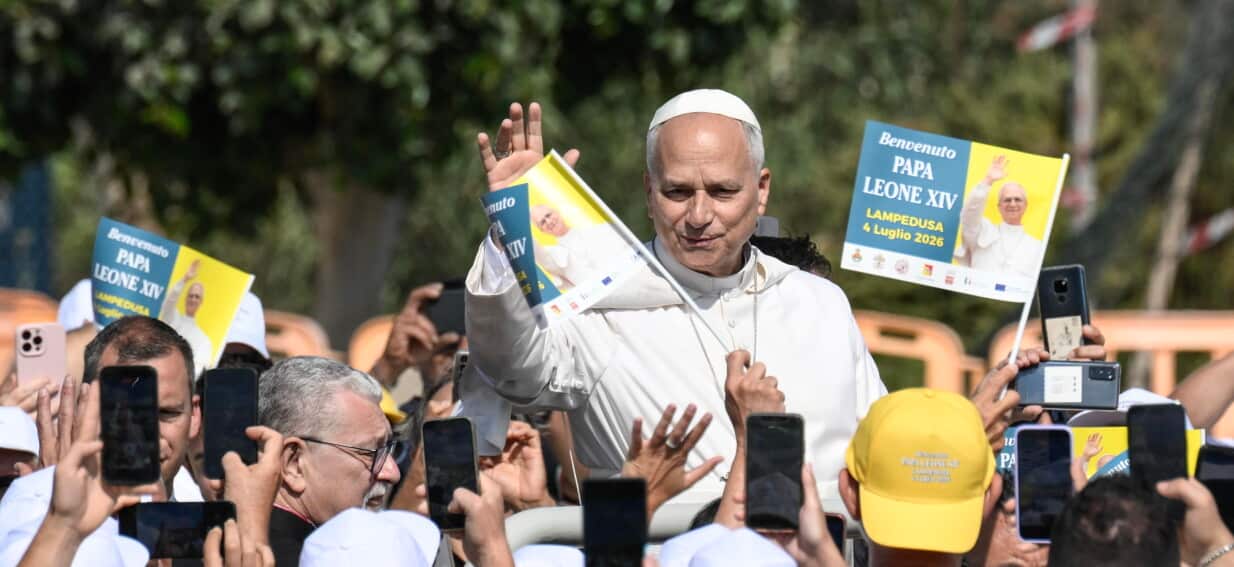
Pope Francis had previously tried a pragmatic approach, throwing them a lifeline by granting temporary faculties for confessions and marriages to keep the dialogue open. But under the current papacy of Pope Leo XIV, the line in the sand has been redrawn. The Vatican made it clear: you cannot claim to be fully Catholic while rejecting the authority of the Pope and the validity of a global council.
The Ripple Effect Across Global Traditionalism
This isn't an isolated incident. The SSPX schism is the largest and most organized rebellion, but it’s part of a wider trend of right-wing Catholic resistance.
Just look at what happened with Archbishop Carlo Maria Viganò, the former Vatican diplomat to the United States. He was formally excommunicated for schism after launching his own traditionalist seminary outside of Rome's control and calling the Pope a "heretic." In Spain, a community of Poor Clare nuns recently made headlines by cutting ties with Rome over property disputes and doctrinal grievances.
What we're seeing is a growing network of believers who are built on distrust of global institutions. They look at a fast-changing world and crave absolute certainty. When the mainstream Church tries to adapt to modern realities, these groups dig their heels into the past.
The tragic irony here is that the laypeople caught in the middle genuinely believe they're doing the right thing. At the Swiss gathering, thousands of families celebrated under tents in the mountain air, convinced they were defending the true faith. One lay organizer, Marc-Andre Mabillard, bluntly told reporters, "Today, I am excommunicated." For these believers, being cast out by Rome is a badge of honor, a sign that they're fighting a holy war against a corrupt establishment.
What This Means for the Future of Faith
The Vatican's decree leaves no room for gray areas. If you’re a Catholic who has been attending Latin Masses at an SSPX chapel, you now face a hard choice. Rome has signaled that continuing to support the society means you are actively participating in a schism.
For the broader religious landscape, this tells us that the culture wars aren't going away. They’re fracturing our oldest institutions from the inside out. When compromise becomes impossible, breaking away becomes the only option left on the table. The bishops in the Swiss Alps have made their choice, and the Catholic Church will be dealing with the fallout for decades to come.
If you want to track how this schism affects local parishes or read the official canonical decrees, you can check the updates on the Vatican's official news portal or review independent analysis via the Catholic World Report. The era of strategic ambiguity is officially over.