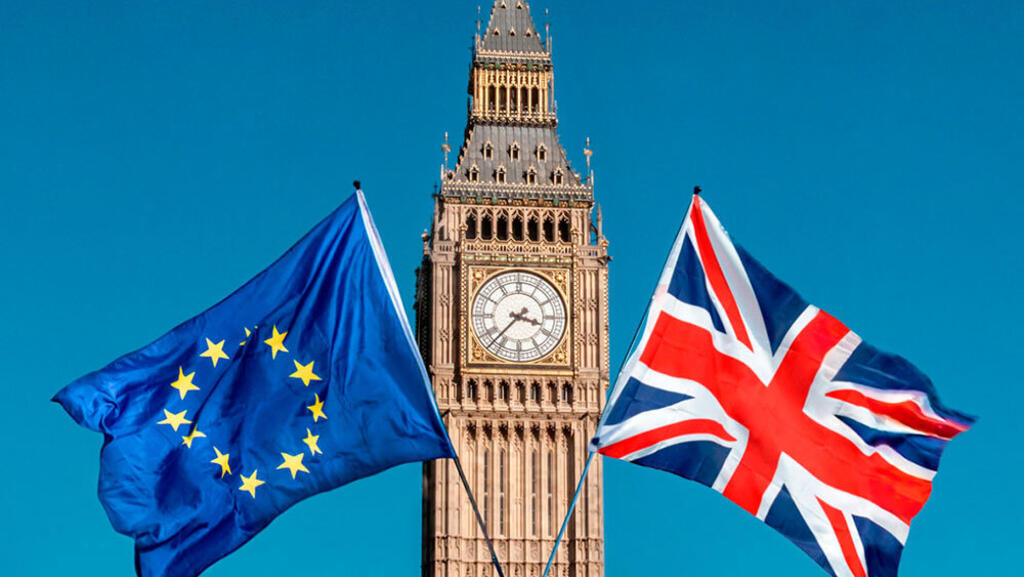
Ten years ago, a slim majority of British voters decided to walk away from the world's largest trading bloc. The promise was simple. Taking back control meant reclaiming borders, reviving public services with cash savings, and unleashing a hyper-dynamic "Global Britain."
Instead, the decade following that fateful 2016 vote has felt less like a triumphant rebirth and more like a slow, structural squeeze.
If you are looking for an honest accounting of what Brexit actually cost, you have to look past the empty political slogans. The damage isn't a single catastrophic crash. It's a steady, corrosive drag on growth, investment, and national confidence that leaves the UK uniquely vulnerable.
The Six Percent Scar
Let's look at the numbers. The Bank of England estimates that Brexit has chopped roughly 6% off the UK's potential Gross Domestic Product. That isn't just an abstract economic data point. It means the British economy is tens of billions of pounds smaller than it should be.
When Covid hit and the war in Ukraine spiked energy prices, every major economy took a beating. But Britain lacked the economic cushion to absorb those hits. As political scientist Colin Hay notes, the country is significantly less well-placed to deal with global shocks today than it would have been inside the European Union.
The money that was supposedly going to flood into the National Health Service didn't materialize. Why? Because when you shrink the overall tax base through lower trade and reduced business investment, there's less money in the state coffers for everything. The big red bus promised a windfall. The reality delivered a fiscal straightjacket.
What Happened to Global Britain
The core theory of the Leave campaign rested on the idea that an independent UK could move faster and cut better trade deals globally than a bureaucratic Brussels machine.
That theory failed its first major test in the real world.
Trading with neighbors matters because of proximity. You can't replace seamless, frictionless trade with Germany or France by signing a modest deal with Australia or New Zealand. The increased red tape, customs checks, and regulatory hurdles at the border have forced small and medium-sized British exporters to give up on the European market entirely.
Worse, London's financial center has watched its global dominance slip. Capital and jobs migrated to Amsterdam, Paris, and Frankfurt. The city didn't collapse, but it lost its monopoly on European finance.
The Myth of Bad Implementation
Walk into any pub and talk to a remaining Leave supporter, and you will likely hear a familiar defense: "Brexit didn't fail. The politicians just botched the execution."
Nigel Farage and his allies have built an entire narrative around this idea. They claim a timid political class refused to fully deregulate or push a "true" Brexit.
But the public isn't buying it anymore. Polling data shows that between 20% and 30% of people who voted to leave would change their vote today. The systemic friction at the border isn't a bureaucratic mistake. It's the inevitable consequence of choosing to leave a customs union and single market. You cannot have total regulatory divergence and frictionless trade at the same time. It's a mathematical impossibility.
Rebuilding Bridges with Empty Pockets
The current Labour government under Keir Starmer faces an impossible balancing act. Starmer wants to fix the relationship with Brussels, remove some of the worst trade frictions, and rebuild damaged diplomatic ties.
But he's operating in a political minefield.
Public Mood Today:
- Regret over economic costs
- Fear of reopening old toxic debates
- Anger at public service decay
The administration is terrified of reopening the toxic cultural wounds of the referendum years. They refuse to talk about rejoin, the single market, or a customs union.
Meanwhile, political instability continues to brew at home. Figures like Greater Manchester Mayor Andy Burnham are waiting in the wings, and any attempt to move too close to Europe risks triggering a backlash from a restless electorate. The tragedy of the current situation is that while the economic diagnosis is clear, the political medicine remains taboo.
Moving Beyond the Blame Game
If you are trying to navigate the UK economic landscape today, waiting for a political savior to reverse Brexit is a losing strategy. The European Union has moved on. Without the UK dragging its feet, the EU has integrated further on regulatory and digital fronts, meaning the gap between UK and EU rules is widening every year.
For businesses and individuals, the path forward requires dealing with reality as it exists, not as it was promised on a campaign poster.
- Audit your supply chain resilience: Relying on just-in-time logistics across the English Channel is dead. Focus on building buffer stocks or sourcing components locally where possible.
- Target non-EU growth sectors explicitly: Since European trade carries a permanent administrative premium, look to services and digital sectors where distance matters less than goods.
- Stop waiting for a policy reversal: Neither major political party has the money or the mandate to take the UK back into Europe anytime soon. Budget for current tariff structures and border checks as a permanent cost of doing business.
The UK didn't fall off a cliff, but it did choose a harder, steeper path. Acknowledging that reality is the first step toward fixing it.