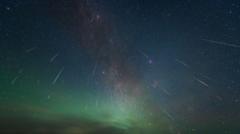
You have probably wasted an evening trying to watch a meteor shower before. You drive out to the middle of nowhere, stare at a blank sky for an hour, freeze your toes off, and see maybe two faint streaks. Usually, you can blame the moon. A bright lunar phase ruins stargazing by bleaching the night sky.
Forget those past disappointments. The 2026 Perseid meteor shower is going to be different, and honestly, it is shaping up to be a perfect astronomical storm.
The Perseids are active every summer from mid-July through late August. But the real magic happens during the peak. This year, the peak hits overnight on August 12 into the early morning of August 13.
Here is why 2026 is special: the moon will be at 0% illumination. A total new moon lands right on August 12. You will have completely ink-black skies, creating the ultimate backdrop for a high-volume celestial show. If you only look up at the night sky once this year, make it this night.
The Science Behind the Fireballs
We call them shooting stars, but you are actually watching ancient space garbage burn up. Every year, Earth slams into the debris trail left behind by Comet 109P/Swift-Tuttle. This comet takes 133 years to orbit the sun, leaving a massive path of dust, ice, and pebbles in its wake.
When Earth passes through the thickest part of this debris cloud, those tiny particles smash into our atmosphere at a blistering 37 miles per second. Friction heats the air around the particle to thousands of degrees, creating the glowing streaks we see from the ground.
What sets the Perseids apart from boring winter meteor showers is the sheer volume of fireballs. Fireballs are exceptionally bright meteors that originate from larger chunks of comet material. They explode in brilliant flashes of light and color, often leaving behind smoke-like "meteor trains" that hang in the air for several seconds. Because the Perseids hit during warm August nights, you can actually sit outside comfortably to watch them happen.
Exactly When and Where to Look
The American Meteor Society predicts the absolute peak of the shower will happen in the afternoon of August 13 UTC, meaning your absolute best viewing windows are the early mornings of August 12 and August 13.
Do not bother heading out right at sunset. The real show starts after midnight and gets progressively better until right before dawn.
By 2:00 a.m. local time, your specific patch of Earth has rotated directly into the oncoming stream of space rocks. It is like a car windshield driving through a swarm of bugs; you hit way more when you are moving forward. Under ideal dark-sky conditions, expect to see anywhere from 50 to 100 meteors per hour during these pre-dawn hours. That is more than one a minute.
You do not need to look in one specific direction. While the meteors appear to radiate from the constellation Perseus in the northeast, they will streak across the entire sky. Looking directly at Perseus actually means you will miss the meteors with the longest, most dramatic tails. Just lie flat on your back and look straight up.
Crucial Steps to Actually See the Show
Most people fail at meteor watching because they do not prepare for human limitations. Follow these rules to make sure you actually see the display.
- Ditch the optics. Leave your telescope and binoculars at home. They restrict your field of view. You need your naked eyes to take in the whole sky at once.
- Give your eyes 30 minutes. Your eyes need time to produce a chemical called rhodopsin, which helps you see in the dark. Every time you glance at your phone screen, you instantly reset that 30-minute timer and blind yourself to the fainter meteors.
- Get out of the suburbs. City glow will obliterate 80% of the meteors. Drive out to a state park, a dark beach, or a rural area. Use a light pollution map online to find a "green" or "blue" zone near you.
- Get comfortable. Bring a reclining lawn chair or a thick blanket. Staring straight up at the sky for two hours will wreck your neck if you try to do it standing up.
Check your local weather forecast on the afternoon of August 12. If heavy cloud cover threatens to ruin the peak night, do not panic. The days immediately leading up to and following the peak will still offer great numbers, thanks to the total lack of moonlight keeping the skies dark all week. Clear out your calendar, find a dark patch of grass, and look up.